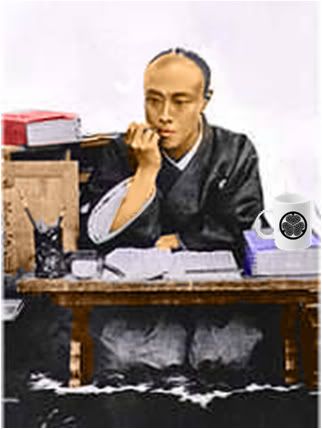
When one thinks about the common people of the Edo period, they probably think of a group of passive, law abiding, hard working farmers and textile producers. In fact, commoners of the Edo period were rowdier than you might imagine - there were literally THOUSANDS of peasant uprisings and disputes over the course of the Edo period. This often happened during times of famine, crop failure, or political turmoil, but wasn't limited to it. Pretty much anything that impinged on a peasant's daily life, livelihood, or long term survival might be enough to set them off. Peasants tended to live "paycheck to paycheck" - Tokugawa Ieyasu's philosophy of taxation was to "tax the peasants to the extent that they don't die, but can't live". It was control of the masses by enforced poverty. Not a strategy unknown in the modern world. Anytime this got out of balance and people were forced to worry about how to feed their families, trouble was surely soon to follow.
In reality, peasants in Edo period Japan probably had it better than peasants in other feudal cultures. During the Edo period, the Samurai lived in the cities separated from the common folk, and so the peasants really had no contact with their absentee overlords, and therefore didn't feel so much like oppressed subjects of the Tokugawa regime. Generally speaking, as long as they obeyed the rules and paid their taxes on time and in the amounts specified, they were left completely alone. Villages were self-run, with headmen appointed (or depending on the area, hereditary) and networked with surrounding villages; they were very well connected and organized at the local level. Local villages relied on each other for support during lean years, or as local markets for goods and services. This level of local organization actually lent itself quite well to mass protest. For villages that were tightly organized, a protest or petition was a simple thing to throw together.
Organized protests were "illegal", but there were prescribed measures for registering protest - the ability to petition one's lord. The Tokugawa government was generally fair, and subscribed to Confucian values, and so tended to treat the peasantry as their "children". And so the peasants, for their part, paid the taxes and obeyed the laws in return for the benevolence granted to them by the lord. Although petitioning was an acceptable form of protest, improperly worded petitions were illegal and grounds for execution. The required form of petition usually went along the lines of asking for assistance from the benevolent lord in order that the petitioner may "continue to live as a farmer". Demands and complaints were patently illegal.
The first line of petitions/protests fell on the local representative, who decided right then and there if the petition was valid and if it would be passed on to the local lord. If it didn't make the cut, peasants were for all intents and purposes SOL when it came to legal recourse. We'll get to the illegal kind in a second, but if the petition was accepted, it would be looked over by the lord, or more likely first line of bureaucrats, and granted or not. Often it involved pleas to lower taxes during times of famine or crop failure, or requests to not be liable for transporting taxes all the way to Edo, or requests to pay taxes "in kind", i.e. if you're a silk producer, being allowed to pay taxes in silk, rather than have to convert it to rice first. Things of that nature. For the most part it seems that requests for temporary reduction of taxes would be granted - because, if you tax your tax base to the extent that they can't feed their families, you were asking for trouble - at best they might flee your domain, leaving untended farm plots that couldn't be farmed, and therefore taxed. At worst you might find yourself with petitioners going over your head to the Bakufu (which reflected more poorly on the local lord than the peasants) or armed uprising.
On the one hand, going over the lord's head was a suicide mission, as the Japanese were sticklers for convention - and often the leaders were executed - but on the other hand, this was often effective in the long run. On more than one occasion, Samurai lords were dispossessed of their lands due to chronic maltreatment of their peasantry and replaced with more lenient benefactors. In fact, protests were surprisingly successful, as peasants rarely protested without good reason. If they were able to eat and able to support their families despite the taxes they were paying, things were good. They were essentially self-governed, and so unless things really became dire for them, there really was no impetus for mass protest.
When things really hit the fan, and things got so bad and peasants got so fed up, but domain leadership was being unresponsive, protests were inevitable. They were more often than not led by upper class respected commoners, and consisted of all the area villages. Village headsmen declined to participate at their own risk, as they themselves might find their own property and livelihood the target of peasant rage. Things rarely got violent, however there are many examples of peasants destroying the homes of merchants, moneylenders, and landlords in what in basic terms was a targeted redistribution of wealth. They were often engineered to take back lands taken by debt, or to return pawned goods to the rightful owners. Often these changes would stick. In most cases, when push came to shove, the local lords would side with the peasants for utilitarian reasons. Lords didn't necessarily get a cut of profit from money lenders or pawn brokers, and so had no financial incentive to side with them, but had all the reason to side with the people that paid them taxes.
When the local lords were the problem, things got more complicated.
Going over the heads of local domain leadership was forbidden, but sometimes the only option for peasants at the end of their collective ropes. And the leadership of the rebellion was also almost guaranteed to be executed. Despite this, peasants were willing to protest directly to the Bakufu, and did so when necessary. As mentioned before, the Bakufu nearly always sided with the peasants, although not before executing the leaders and pretending that the changes they enacted had nothing to do with the protest in the first place. Also as mentioned, often peasants protesting directly to the Bakufu could result in the lord of the local domain being given the boot - the Bakufu liked order, and liked receiving taxes, and felt that a lord who is such a poor administrator that his peasants are rebelling is obviously just plain bad at his job. So it was always in the best interest from both a Confucian, and utilitarian point of view to treat his subjects fairly. Despite the peril that a local lord might be put in with peasant rebellions, the immediate intent of these rebellions was almost never regime change, and was almost exclusively based on far more pragmatic needs, mainly the lowering of taxes so that the peasants don't starve or are forced to flee the region to find a better place to live.
Plenty of information about the rebelliousness of the Edo period can be found in Stephen Vlastos' book Peasant Protests and Uprisings in Tokugawa Japan as well as the discussion thread for this book on the Samurai Archives Japanese History Forum.
Welcome to the Shogun's mansion
The official blog of the Samurai Archives Japanese History Page
Showing posts with label Edo period. Show all posts
Friday, May 29, 2015
Saturday, November 23, 2013
'Tis The Season For The Ronin-Shambhala’s “The 47 Ronin” Graphic Novel
December has always been the month where the 47 Ronin enter the stream of modern Japanese consciousness. The assault by the Ronin on Lord Kira’s estate took place on the “fourteenth day of the twelfth month” in the year of Genroku 15. While this actually corresponds to January 30th of the Western calendar, the Japanese have traditionally recognized it on December 14th. The Ronin appear in commercials, special events and observances are held at Sengakuji Temple (where the Ronin’s graves are located), and the airwaves tend to screen a goodly number of the dozens of TV shows and movies that have depicted the event over the decades. And this year, the Ronin will be making their presence felt in December in the West. Most obvious is the big-budget fantasy film “47 Ronin” starring Keanu Reeves that will be making its US debut Christmas day. Filled with CGI monsters and having little to do with the real 47 Ronin, it remains to be seen how the movie going public will react to it. But Shambhala Publications has also recently released a graphic novel version of the traditional 47 Ronin tale, just in time to join the festivities. The team of writer Sean Michael Wilson and artist Shimojima Akiko (along with letterer Ben Dickson) have combined to put together an adaptation of Chushingura (roughly ‘treasury of loyal retainers’, the fictional account of the historical incident that has been the subject of hundreds of kabuki plays, puppet plays, films, manga, novels, and artwork over the centuries) that exceeds anything yet done in the West (including the recent failed Dark Horse adaptation). It’s a solid adaptation that faithfully brings out the story’s many facets, perfectly complimented by accurate, simple, and clean artwork.One issue that needs to be addressed up front is the press releases/publicity for the book. While the full versions make it clear that the graphic novel is a depiction of Chushingura (the heavily fictionalized account of the 47 Ronin incident that became popular in Edo period Japan), the shorter versions only state that it’s “…the first historically accurate graphic-novel version of a legendary event in Japanese history”. Just to be clear, the graphic novel is indeed based on the Chushingura legend, not the facts of the historical incident. Since we’ve examined these differences at length in other articles, we’ll just touch on them here. Some of the more important differences between Chushingura and actual history include:
-Chushingura contains many fictional characters, such as Kamei and ‘Urata from Satsuma’ AKA the Satsuma man.
-it also contains many fictional incidents-for example, after the assault, the Ronin pass through the streets of Edo stopping to be praised and feted by the populace. They actually moved expeditiously to their final goal of Sengakuji Temple as they feared an assault by the Uesugi and certainly weren't being embraced by the townspeople.
-Asano is shown in Chushingura as the embodiment of samurai values and virtue, whereas in real life he was a drunken womanizer with no skills to speak of (as we like to say, the 'Brick McBurly of his day').
-Oishi (the leader of the Ronin) is depicted as a loyal and brilliant retainer, but was also a man of few skills aside from drinking and procuring women for Asano.
-Kira Yoshihisa (often referred to as ‘Yoshinaka’) is shown as a grasping, greedy villain but there is no historical evidence to support it. He was more of a typical bakufu bureaucrat.
-Asano Naganori’s assault is provoked by Kira’s greed and rudeness, but the truth is that no one has a clue why he did it.
-the Ronin are shown in Chushingura to be taking great care to take no innocent lives, but during the assault they slaughtered many of Kira’s household staff.
There are lots more differences-if you’re interested, you can read about them here, here, or here. We’re also assuming our readership is acquainted with the general details of the 47 Ronin-but if not, here’s the ‘Cliffs Notes’ version. Asano Naganori, daimyo of Ako han, was assigned to study court etiquette under the tutelage of Kira Yoshihisa in order to attend Imperial envoys visiting the Shogun’s court. For some unknown reason (rudeness on Kira’s part due to not being bribed? Resentment over being properly chastised on Asano’s part?), Asano attacked Kira with his sword inside the Shogun’s Edo Castle-an act punishable by death. Asano was forced to commit ritual suicide, his lands were confiscated, and his family and retainers turned out. 47 of these retainers banded together and a year or so later assaulted Kira’s mansion, in effect ‘finishing Asano’s work’, killing Kira in what amounted to a feudal drive-by. But let’s get to the graphic novel…Author Sean Michael Wilson sticks closely to the traditional accounts, not embellishing the Ronin with further exploits or fawning hero worship. This being the case, Kira is the villain, Asano a victim, and the Ronin are the true heroes of the story. Unlike many Western authors, however, Wilson doesn’t omit some of the darker threads of the old legends that are often dropped. One of these is Oishi’s implied criticism of Asano-“I hope I can be allowed to express some doubt as to the wisdom of our Lord’s actions. But it is done now and we must act well. If the Shogun will allow Asano Daigaku to become the new Lord, then we can continue the house with honor”. This short discourse brings an entirely new dimension to the Ronin’s vendetta, and is further embellished by Wilson presenting it as a conversation between the two factions of the Ako Ronin. In a little over two pages, much is explained. The feuding factions of the Ronin (the radicals led by Horibe Yasubei who wanted to kill Kira at once and Oishi’s moderates who only wanted the Asano family to remain in control of Ako) that almost resulted in the assault being called off, the waiting period of a year between Asano’s suicide and the raid (not because the Ronin were trying to lull Kira’s suspicions, but because they were waiting on the Shogun’s decision), the question of whether the Ronin were truly loyal to Asano Naganori or just to their positions within the house of Asano-they’re set up effortlessly and subtly. The Ronin’s callous manipulation of women and employers, and the cruelty of Oishi’s rejection of his wife and family (albeit for a good reason) are shown for all to see. By not editing these incidents from the proceedings, Wilson manages to turn the Ronin from cardboard heroes into human beings with realistic motivations and feelings. It’s also closer to real history, as most historians believe the Ronin acted to preserve their individual honor rather than out of any loyalty to Asano (who the majority had never even met). Even some of Kira’s retainers are allowed their moment to shine, with a small group of three holding back the Ronin.
Also given time to develop is the friendship between ‘Kamei-sama’ and Asano. Traditionally, Kamei is shown as the real hothead of the pair and is only saved from Asano’s fate by the quick thinking of two of his retainers (behind Kamei’s back, they bribe Kira, ending his verbal abuse of Kamei). Wilson depicts Asano’s efforts to connect with Kamei in an effort to keep him from assaulting their teacher. The friendship between the two daimyo again helps to make them believable, and as Kira turns the full of his scorn on Asano, it makes Asano’s transition from the voice of reason to unbridled rage all the more shocking and unexpected. Combined with the graphic portrayal of his seppuku (ritual suicide), it makes him a far more sympathetic character. This Asano is not perfect, but one can understand his frustration, confusion, and anger.
Many works dealing with the 47 Ronin tend to be bloodless affairs, concentrating on the ‘glory’ of the assault and glossing over the violence that was a part of it. Kira’s murder and Asano’s seppuku usually take place ‘off-screen’ or are not described in anything but the most general terms. Not so here. They’re depicted in all their ugliness, giving this version of the story a more visceral impact that tends to rip away more of the fairy tale aspect of the story and make it much more realistic. When stripped to its essentials, the tale of the Ronin is nothing more than the tragic retaliatory murder of a largely blameless old man (described by historian James McMullen as an '...atavistic, violent, and futile incident' involving '...reductive morality and brittle sense of honor that sanctioned such pointless sacrifice'), and nothing brings this home more than Oishi’s beheading of Kira.For the most part the tale flows smoothly from one incident to another, although there is a bit of a rough transition from a scene between Kira and Asano to Asano’s later assault on Kira in Edo castle. It comes across as one incident, although the costuming and situation soon make it obvious such is not the case. Chushingura is a LONG story-kabuki plays can take days, movies several hours. Compressing everything into 150 pages or so is not an easy job, but Wilson manages to include all of the high points along with many of the sub-plots (most famously the ‘side jobs’ of the Ronin in Edo as they spy on Kira in the guise of workmen and merchants) without making things seem rushed. Dialogue takes the proper tone-a rather old-fashioned and formal way of speaking that reflects as best as it can in English the tone that a samurai would be employing in everyday speech.
Artist Shimojima Akiko’s black and white artwork is a breath of fresh air, showing an excellent level of accurate cultural and historical detail that was lacking in the Dark Horse version of the Ronin. In our opinion, it’s also far more suited to this serious story than the more whimsical and cartoonish artwork featured in the Dark Horse effort. Her double splash page spread of Edo Castle (home of the Shogun and the setting for Asano’s assault) is a perfect example, showing a grasp of Edo period Japanese architecture and castle layout that evades most artists in the West (many of whom seemingly take their cues from Chinese Wuxia films). It gives the story an authentic air that helps the reader to immerse themselves in the story rather than distract them.As well as technical ability, she also displays a subtle touch, such as several illustrations of a spider in its web slowly being revealed as being over Asano’s shoulder-a nice bit of symbolism. The simple look of heartfelt hurt on the face of Oishi’s young daughter as he disowns her is heartbreaking. While Shimojima’s depiction of the Ronin’s assault on Kira’s mansion is done in the best frenetic manga style, there are quiet moments interspaced-such as when Kira’s chief retainer is struck down and his essence slowly drifts into the sky. For him, this battle is over and no longer matters. It imparts the sense of the transitory and impermanent nature of things inherent in Buddhism. Interestingly, this concept is stood on its head in the final scene, where the dying body of the Satsuma Man fades away to show a modern family paying homage to the Ronin’s graves at Sengakuji. While the body might pass on, the legend continues to live in perpetuity.
Shimojima also does her best to make the individual characters identifiable. The Shogun’s court stressed conformity and standardization (one reason Asano needed instruction in the highly intricate and detailed sphere of court etiquette). Hairstyles were also tightly regulated. This means that everyone had a rather generic look. Shimojima manages within this context to give cues to the reader-the differing crests on the formal kataginu, small differences in hairstyles, the shading and patterns of clothes, even things as subtle as eyebrow thickness all help in picking out the key players. It also rewards sharp-eyed readers who can spot characters from earlier in the story showing up later.
One mild criticism of the book is that it would have benefited from a short text piece such as was included in Wilson’s two other graphic novels for Shambhala. Many cultural and historical issues that Western audiences might find confusing could have been explained here, such as why Asano became homicidal when asked to tie the ribbon on Kira’s sock or why Oishi would have been so brutal in dealing with his wife (casting her out meant his family would not be held responsible for his actions and punished). Why do all in the samurai in the castle have ‘pants’ on that are twice as long as their legs (this was used to keep them from moving quickly and designed to forestall possible assassination attempts on the Shogun)? It also could have been used to give more background on the historical incident.
So if you’re looking for an adaptation of the Chushingura legend that sticks to the story and doesn’t include fantasy monsters, witches, giants, or gaijin actors shoehorned into the tale, you won’t find a better executed one than Wilson’s and Shimojima’s “The 47 Ronin”. It’s an adaptation that manages to infuse both the Ronin and their foes with humanity. Author Wilson makes you feel Asano’s outrage, Kira’s panic, the conflicting views of Asano’s retainers, and the excitement of the raid. Artist Shimojima gives us a period-accurate Japan laced with dynamic action and quiet moments in turn. They’ve taken what is often depicted as a morality tale filled with two dimensional characters and given it depth and texture. During this season of the Ronin, ‘tis the book ye be looking for. The 47 Ronin is available directly from Shambhala or from Amazon.
All artwork courtesy and copyright 2103 Shambhala Publications. It may not be reproduced, in any form or by any means, electronic or mechanical, including photocopying, recording, or by any information storage and retrieval system, without permission in writing from the publisher.
Thursday, March 25, 2010
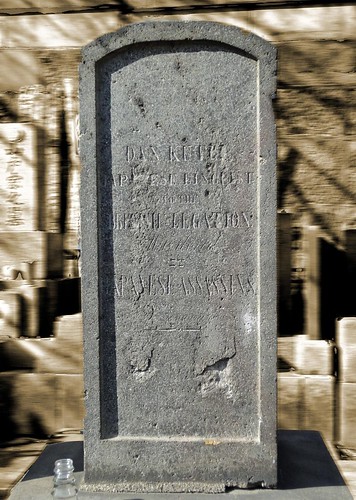
Here Lies Dan Kutci, Victim of Sonnō Jōi Terrorism

DAN-KUTCI
JAPANESE LINGUIST
TO THE
BRITISH LEGATION
Murdered
BY
JAPANESE ASSASSINS
29th January, 1860
Tucked away in a corner of Kōrin-ji, a Rinzai Zen Buddhist temple In Azabu, Minato-ku, Tokyo, one can find the grave of Dan Kutci, a Japanese linguist who was employed by the British legation. Kutci, like another fellow translator, Henry Heusken, whose tombstone lies within the shadow of Kutci’s, was killed in an act of terror committed by anti-foreigner ‘terrorists’ during the waning days of the Tokugawa Shogunate.
But who was Dan Kutci? Who wanted him dead and why? For starters, Dan Kutci was a native of Japan and was more commonly known among the Japanese by the name, Denkichi—Kumano no Denkichi, to be exact. Denkichi originally hailed from Shiotsumura in the province of Kishū (present day Shiotsu, Wakayama Prefecture). Denkichi served on a merchant ship, the Eirikimaru that was returning back to Setsu from Edo with a full cargo when the ship got caught in a storm on Dec 2, 1850. The ship drifted for 53 days until it was rescued by an American merchant ship, the Aukland, which brought the Japanese to San Francisco on March 5, 1851. With nowhere to go, the 17-man crew of the Eirikimaru was confined to a US Customs ship, the Polk, for nearly a year until they boarded the USS Saint Mary, a warship outbound for Asia where it was hoped that the Japanese could be repatriated with Perry’s upcoming expedition. One of the Japanese died along the way and was buried in Hilo, Hawaii. The others continued on and arrived in China where they soon found employment and were dissuaded from returning to Japan with the Perry Expedition. However, Denkichi was eventually able to rendezvous with Perry’s squadron as it made its way back to America and was able to secure passage on Perry’s flagship, the Mississippi in July 1854 when the ship steamed into Hong Kong.
After five years in America, Denkichi found himself back in China where he was hired as a translator by Rutherford Alcock, England’s minister to Japan and the two arrived in Edo (Tokyo) on May 26, 1859. It had been 9 years since Denkichi had been back in Japan. But after returning home after such a long absence, Denkichi didn’t quite fit in and acted in a manner that was perhaps more Western than Japanese. He told people he was British, wore western clothing and acted very haughtily, which angered many of his countrymen and made him a prime target for the radicals who were advocating expelling the foreigners and restoring imperial rule. And it was on the afternoon of January 29, 1860 that two samurai wearing straw hats to cover their faces, attacked Denkichi, driving either a short sword (wakizashi) or most likely a dagger (tantō) up until the hilt deep into his back, leaving it there. Poor Denkichi, haughty or not, had just become a victim of sonnō jōi terrorism.
Sonnō jōi (revere the emperor; expel the foreigners) was a rousing phrase and political philosophy to which young radicals rallied in the waning days of the Tokugawa shogunate. Fueled by a growing pro-imperial sentiment and anger at the shogunate for opening the country to the West, the sonnō jōi movement became a nascent unifying force that challenged and weakened the 250 year-old status quo of Tokugawa rule. As violence was the movement’s primary tool as a means of enforcing ‘heaven’s will’, this helped Japan slip into the chaos and wanton terror that would help define the Bakumatsu period and engulf the lives of many foreigners and Japanese alike.
Denkuchi may have died a victim of sonnō jōi terrorism 150 years ago, but he’s not forgotten.
Source: Miyanaga, Takashi. “The Assassination of Denkichi. Journal of Society and Labour, Hosei University, 40(3/4), 1993.
JAPANESE LINGUIST
TO THE
BRITISH LEGATION
Murdered
BY
JAPANESE ASSASSINS
29th January, 1860
Tucked away in a corner of Kōrin-ji, a Rinzai Zen Buddhist temple In Azabu, Minato-ku, Tokyo, one can find the grave of Dan Kutci, a Japanese linguist who was employed by the British legation. Kutci, like another fellow translator, Henry Heusken, whose tombstone lies within the shadow of Kutci’s, was killed in an act of terror committed by anti-foreigner ‘terrorists’ during the waning days of the Tokugawa Shogunate.
But who was Dan Kutci? Who wanted him dead and why? For starters, Dan Kutci was a native of Japan and was more commonly known among the Japanese by the name, Denkichi—Kumano no Denkichi, to be exact. Denkichi originally hailed from Shiotsumura in the province of Kishū (present day Shiotsu, Wakayama Prefecture). Denkichi served on a merchant ship, the Eirikimaru that was returning back to Setsu from Edo with a full cargo when the ship got caught in a storm on Dec 2, 1850. The ship drifted for 53 days until it was rescued by an American merchant ship, the Aukland, which brought the Japanese to San Francisco on March 5, 1851. With nowhere to go, the 17-man crew of the Eirikimaru was confined to a US Customs ship, the Polk, for nearly a year until they boarded the USS Saint Mary, a warship outbound for Asia where it was hoped that the Japanese could be repatriated with Perry’s upcoming expedition. One of the Japanese died along the way and was buried in Hilo, Hawaii. The others continued on and arrived in China where they soon found employment and were dissuaded from returning to Japan with the Perry Expedition. However, Denkichi was eventually able to rendezvous with Perry’s squadron as it made its way back to America and was able to secure passage on Perry’s flagship, the Mississippi in July 1854 when the ship steamed into Hong Kong.
After five years in America, Denkichi found himself back in China where he was hired as a translator by Rutherford Alcock, England’s minister to Japan and the two arrived in Edo (Tokyo) on May 26, 1859. It had been 9 years since Denkichi had been back in Japan. But after returning home after such a long absence, Denkichi didn’t quite fit in and acted in a manner that was perhaps more Western than Japanese. He told people he was British, wore western clothing and acted very haughtily, which angered many of his countrymen and made him a prime target for the radicals who were advocating expelling the foreigners and restoring imperial rule. And it was on the afternoon of January 29, 1860 that two samurai wearing straw hats to cover their faces, attacked Denkichi, driving either a short sword (wakizashi) or most likely a dagger (tantō) up until the hilt deep into his back, leaving it there. Poor Denkichi, haughty or not, had just become a victim of sonnō jōi terrorism.
Sonnō jōi (revere the emperor; expel the foreigners) was a rousing phrase and political philosophy to which young radicals rallied in the waning days of the Tokugawa shogunate. Fueled by a growing pro-imperial sentiment and anger at the shogunate for opening the country to the West, the sonnō jōi movement became a nascent unifying force that challenged and weakened the 250 year-old status quo of Tokugawa rule. As violence was the movement’s primary tool as a means of enforcing ‘heaven’s will’, this helped Japan slip into the chaos and wanton terror that would help define the Bakumatsu period and engulf the lives of many foreigners and Japanese alike.
Denkuchi may have died a victim of sonnō jōi terrorism 150 years ago, but he’s not forgotten.
Source: Miyanaga, Takashi. “The Assassination of Denkichi. Journal of Society and Labour, Hosei University, 40(3/4), 1993.
Friday, October 02, 2009
Shogun Coffee
While Pepsi Shiso may be a liquid car wreck in a bottle, Tokugawa Shogun Coffee, sold by Saza Coffee, is nothing short of heaven in a mug. Now some of you are probably scratching your heads wondering what the heck “Shogun Coffee” is. Is this some sort of gimmick meant to cash in on the “history” boom that is sweeping across Japan? No, it isn’t and this is all about really good coffee with a pedigreed history!The story starts in 1867, as the turmoil of the Bakumatsu period was reaching fever pitch. The 15th and last Tokugawa Shogun, Yoshinobu, was desperately trying to modernize the Bakufu’s finances and military capabilities. For this, he turned to the French, who at the time were led by Emperor Napoleon III, who dreamed of expanding France’s sphere of influence in Asia. Nothing against France, but perhaps the Shogunate’s decision to rely on France wasn’t the wisest choice, as things didn’t really work out that well for both parties’ positions in Japan. However, you can’t blame the Tokugawa for looking to France over Britain when it came to the culinary arts. Besides pork, there was another item in France’s culinary arsenal that captivated Yoshinobu, and that was coffee. Although the Saza coffee site says coffee was officially introduced to Japan in 1867, I have a hunch it probably wasn’t something extraordinary new to the Japanese ruling elite, as the Dutch were exporting it by the ton from their holdings in Indonesia and had probably been presented to the court of the Shogun via the Dutch settlement in Nagasaki. Perhaps even Perry served some to visitors to his squadron of Black Ships. Who knows? However, French roast coffee was something new, strong and quite powerful. Yoshinobu apparently liked it, and he soon arranged to have French roast coffee served at all diplomatic functions involving the Western powers.
It also seems that Yoshinobu’s younger brother, Akitake, who traveled to France for the World Expo in Paris with the famed industrialist Shibusawa Eiichi, seemed to also enjoy this coffee on their steamship voyage to Europe. Notes on how the beans were roasted must have been written down, as one of Yoshinobu’s direct descendants, Tokugawa Yoshitomo, is roasting some mighty fine beans and selling it through Saza Coffee’s internet site. (Unfortunately, they don’t ship outside of Japan).
Curious to try “Shogun” Coffee”, I ordered a 200 gram pack at a cost of 1,800 yen. Not cheap by any means, but would you expect small batch roasted premium coffee fit for a shogun to be priced and marketed as a budget brand? I think not! Needless to say, my small stock of Shogun Coffee did not last long at all as I couldn’t get enough of it. Shogun Coffee is an enjoyable, full-bodied robust roast, loaded with high-octane caffeine—just what one needs when starting the day. The boldness of the brew really is what gets you after your first sip, but it is also surprisingly velvety smooth, like some of the estate-grown private label coffees from Kona that you can get at premium restaurants and hotels in Hawaii. I think the closest thing I’ve had to this would be one of the vintage Eddie Sakamoto coffees that are available at Alan Wong’s restaurant on King Street in Honolulu.Again, this coffee is really good, and I am lamenting the fact that I am all out of it. And perhaps I just inadvertently solved a mystery, right here and now. Just why did Yoshinobu flee from Osaka Castle in the dead of night after the defeat of the Shogunal forces at the Battle of Toba-Fushimi? Could it be that he expended the stock of coffee that he had brought with from Edo and needed to get back to Edo, where a hefty supply was readily available? I’m starting to think so, and I also think it’s time for me to replenish my own supply!
Subscribe to:
Posts (Atom)