 While manga treatments of famous works of Japanese literature are common in Japan, they’re virtually unknown in the West. Part of this is due to the long-standing prejudice in Western societies that ‘comics’ are nothing more than entertainment for children. Over the past 25 years or so, the graphic novel has changed that way of thinking. While they often provide the adventures of our favorite super-heroes, they’ve also provided a venue for talented writers and artists to craft serious stories aimed squarely at adults. As the square bound graphic novel has become accepted reading matter for adults, works that one would never have imagined appearing in comics form have appeared-among those two recent black-and-white releases from Shambhala Publications. Today we’ll be examining how the ‘graphic approach’ has worked out for Musashi Miyamoto’s “The Book of Five Rings” and Chozanshi Issai’s “The Demon’s Sermon on the Martial Arts”.
 Most readers will already be familiar with swordsman Musashi Miyamoto and his famed Edo period sword treatise “The Book of Five Rings” (“Go Rin No Sho”). Using the format of the traditional five Japanese elements of earth, wind, water, fire, and emptiness (often expressed as the void or the sky), Musashi presents the thoughts behind his style of martial arts and also how they can be applied in life to virtually any situation. The ‘Earth’ chapter gives an overview of the martial arts and weaponry in general. Musashi explains the techniques and philosophy of his style, ‘Niten Ichi-ryu’ (‘two heavens as one’, the famous two swords style), in ‘Water’. Warfare (as opposed to dueling) is the subject of ‘Fire’. The shortcomings of other sword styles as Musashi sees them are presented in ‘Wind’. The proper frame of mind for learning comprises the final chapter, ‘Emptiness’. We’ll give some thoughts on Musashi’s work itself before we look at how it is affected by being put into comics form.
While Musashi claims that he “…neither borrowed the ancient words of Buddhism or Confucianism”, he did indeed borrow heavily from their concepts-Buddhism in particular, using the idea of ‘attachment’ as its core. Over and over he stresses that one should strive to make their mind free of attachments-in effect, to be able to adapt quickly and easily to any situation. Whether it’s your opponent, his weapon, his style, the environment, one should never dwell on one aspect but rather open your mind and take everything in. The esoteric Buddhist ideal of ‘enlightenment’ coming from one’s own efforts (rather than being contingent on a holy being) is reflected by Musashi’s exhortations to “See everything for yourself” and “you should investigate this thoroughly”.
The text also tells us much about the realities and practical nature of the samurai. Musashi doesn’t fill his work with glowing words about honor and bushido-it stresses that the entire point of combat is not to fight honorably but to win, using whatever means possible. Far from considering guns a ‘coward’s weapon’, Musashi proclaims them the ultimate weapon for a castle defense and on an open battlefield before closing with the enemy. He stresses that every weapon has its benefits and drawbacks and one should learn to master them all. The role of the sword in peacetime Edo is stressed when Musashi proclaims “it is by virtue of the sword that both society and oneself are put in order”. As warfare and its weapons disappeared from the life of the samurai, they increasingly began to infuse their sword training with concepts borrowed from Buddhism and Confucianism to enrich their spiritual life and change their focus to civilian administration (the idea of turning away from the ‘death-giving sword’ to the ‘life-giving sword’, the subject of an upcoming review we’ll be doing). This spiritual aspect was a very real part of Edo period sword training as explained by historian Karl Friday in an interview he did with the SA. Surprisingly, Musashi has contempt for most formal martial arts, denigrating them as promoting ‘style over substance’, being overly concerned with making themselves saleable and raking in money, and limiting their students to a single technique (sounds a lot like he was speaking of many modern martial arts schools, doesn’t it?).
Most readers will already be familiar with swordsman Musashi Miyamoto and his famed Edo period sword treatise “The Book of Five Rings” (“Go Rin No Sho”). Using the format of the traditional five Japanese elements of earth, wind, water, fire, and emptiness (often expressed as the void or the sky), Musashi presents the thoughts behind his style of martial arts and also how they can be applied in life to virtually any situation. The ‘Earth’ chapter gives an overview of the martial arts and weaponry in general. Musashi explains the techniques and philosophy of his style, ‘Niten Ichi-ryu’ (‘two heavens as one’, the famous two swords style), in ‘Water’. Warfare (as opposed to dueling) is the subject of ‘Fire’. The shortcomings of other sword styles as Musashi sees them are presented in ‘Wind’. The proper frame of mind for learning comprises the final chapter, ‘Emptiness’. We’ll give some thoughts on Musashi’s work itself before we look at how it is affected by being put into comics form.
While Musashi claims that he “…neither borrowed the ancient words of Buddhism or Confucianism”, he did indeed borrow heavily from their concepts-Buddhism in particular, using the idea of ‘attachment’ as its core. Over and over he stresses that one should strive to make their mind free of attachments-in effect, to be able to adapt quickly and easily to any situation. Whether it’s your opponent, his weapon, his style, the environment, one should never dwell on one aspect but rather open your mind and take everything in. The esoteric Buddhist ideal of ‘enlightenment’ coming from one’s own efforts (rather than being contingent on a holy being) is reflected by Musashi’s exhortations to “See everything for yourself” and “you should investigate this thoroughly”.
The text also tells us much about the realities and practical nature of the samurai. Musashi doesn’t fill his work with glowing words about honor and bushido-it stresses that the entire point of combat is not to fight honorably but to win, using whatever means possible. Far from considering guns a ‘coward’s weapon’, Musashi proclaims them the ultimate weapon for a castle defense and on an open battlefield before closing with the enemy. He stresses that every weapon has its benefits and drawbacks and one should learn to master them all. The role of the sword in peacetime Edo is stressed when Musashi proclaims “it is by virtue of the sword that both society and oneself are put in order”. As warfare and its weapons disappeared from the life of the samurai, they increasingly began to infuse their sword training with concepts borrowed from Buddhism and Confucianism to enrich their spiritual life and change their focus to civilian administration (the idea of turning away from the ‘death-giving sword’ to the ‘life-giving sword’, the subject of an upcoming review we’ll be doing). This spiritual aspect was a very real part of Edo period sword training as explained by historian Karl Friday in an interview he did with the SA. Surprisingly, Musashi has contempt for most formal martial arts, denigrating them as promoting ‘style over substance’, being overly concerned with making themselves saleable and raking in money, and limiting their students to a single technique (sounds a lot like he was speaking of many modern martial arts schools, doesn’t it?).
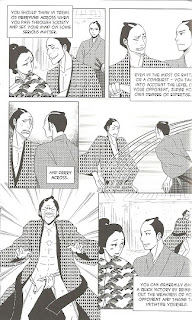 “The Book of Five Rings” is far from the only sword treatise penned by an itinerant swordsman during the Edo period, but it’s certainly the most famous, aided immensely by Musashi becoming famous through his exposure in Yoshikawa’s Eiji’s 1930’s novel ’Musashi’. One often hears of it being used by Japanese sararimen to find success in business as well as life. Is there any justification for this? Insofar as Musashi points out that the concepts behind his philosophy can be applied to any job or career, sure. Hard work, constant practice, a hands on style, an aggressive (but not careless) attitude, and above all, adaptability to changing circumstances will help to make one successful in virtually any endeavor. These values are certainly not limited to the martial arts, nor are the Buddhist and Confucian concepts behind them. However, we suppose it’s as good a place to learn them as any-and as shown here, you can even use the sword techniques to impress the chicks!
Sean Michael Wilson is the writer responsible for adapting Musashi’s work into graphic novel form (based on William Scott Wilson’s translation). Displaying a great deal of respect for and knowledge of the original work, he has managed to boil it down to its essentials. Some concepts just don’t lend themselves to visual form, but here the text is greatly enriched by the illustrations. It would be interesting to find out how closely Wilson worked with the artist and how much of the symbolism and visualizations came from him. We’re guessing it was the majority. The finished work is multilayered and will yield greater insights with each reading. In fact, it DEMANDS to be reread. Make no mistake, this is no simple comic that can easily be blown through in a few minutes and then forgotten.
The only complaint from a historical standpoint one might have is that Musashi is usually rendered as a clean, well groomed samurai, not the filthy, unkempt ‘vagabond’ he was for most of his years. However, as he is shown during his time as a vassal of the Hosokawa, one would imagine that he would have been far better tricked out than he was in his years on the road. Otherwise, illustrator Kutsuwada Chie’s artwork is a perfect example of the style being well suited for the work. Her stark, high contrast visuals veer towards the angular and are filled with strong vertical, horizontal, and diagonal lines. This lends itself well to conveying Musashi’s highly aggressive and direct approach to life and the philosophy behind it. It also matches the simple, Spartan lifestyle he enjoyed. The synergy between adapter Wilson and the artist is also in evidence as well. One of our favorite sections is in the ‘Emptiness’ chapter. While Musashi carves an unseen image, he summarizes his approach to the martial arts (and by extension, life) and the true meaning of the ‘heart of emptiness’. Panels of emptiness begin to pop into his explanations, increasing in frequency along with the reader’s understanding. Finally, there is nothing left but ‘emptiness’ after Musashi exhorts his reader to “make emptiness the way and see the way as emptiness”.
“The Book of Five Rings” is far from the only sword treatise penned by an itinerant swordsman during the Edo period, but it’s certainly the most famous, aided immensely by Musashi becoming famous through his exposure in Yoshikawa’s Eiji’s 1930’s novel ’Musashi’. One often hears of it being used by Japanese sararimen to find success in business as well as life. Is there any justification for this? Insofar as Musashi points out that the concepts behind his philosophy can be applied to any job or career, sure. Hard work, constant practice, a hands on style, an aggressive (but not careless) attitude, and above all, adaptability to changing circumstances will help to make one successful in virtually any endeavor. These values are certainly not limited to the martial arts, nor are the Buddhist and Confucian concepts behind them. However, we suppose it’s as good a place to learn them as any-and as shown here, you can even use the sword techniques to impress the chicks!
Sean Michael Wilson is the writer responsible for adapting Musashi’s work into graphic novel form (based on William Scott Wilson’s translation). Displaying a great deal of respect for and knowledge of the original work, he has managed to boil it down to its essentials. Some concepts just don’t lend themselves to visual form, but here the text is greatly enriched by the illustrations. It would be interesting to find out how closely Wilson worked with the artist and how much of the symbolism and visualizations came from him. We’re guessing it was the majority. The finished work is multilayered and will yield greater insights with each reading. In fact, it DEMANDS to be reread. Make no mistake, this is no simple comic that can easily be blown through in a few minutes and then forgotten.
The only complaint from a historical standpoint one might have is that Musashi is usually rendered as a clean, well groomed samurai, not the filthy, unkempt ‘vagabond’ he was for most of his years. However, as he is shown during his time as a vassal of the Hosokawa, one would imagine that he would have been far better tricked out than he was in his years on the road. Otherwise, illustrator Kutsuwada Chie’s artwork is a perfect example of the style being well suited for the work. Her stark, high contrast visuals veer towards the angular and are filled with strong vertical, horizontal, and diagonal lines. This lends itself well to conveying Musashi’s highly aggressive and direct approach to life and the philosophy behind it. It also matches the simple, Spartan lifestyle he enjoyed. The synergy between adapter Wilson and the artist is also in evidence as well. One of our favorite sections is in the ‘Emptiness’ chapter. While Musashi carves an unseen image, he summarizes his approach to the martial arts (and by extension, life) and the true meaning of the ‘heart of emptiness’. Panels of emptiness begin to pop into his explanations, increasing in frequency along with the reader’s understanding. Finally, there is nothing left but ‘emptiness’ after Musashi exhorts his reader to “make emptiness the way and see the way as emptiness”.
 We now move on from the practical world of Musashi to a whimsical world of demons and talking animals in “The Demon’s Sermon on the Martial Arts” (“Tengu Geijutson”). The author of this Edo period work was (the pen name of Niwa Tadaaki), a samurai from Sekiyado han in Shimosa province. Chozanshi, while interested in swordsmanship, was primarily known as a bunjin (what we’d call a ‘man of letters’ in the West). “Demon’s Sermon” is actually somewhat of a compilation of two of his efforts-the title work along with a selection of short stories from his “Inaka Soshi” (The Hayseed Taoist). These stories, despite the book’s title, are far more concerned with Buddhist and Confucian concepts than the techniques and execution of swordsmanship (most of the martial arts discussion takes place between the tengu).
 The story revolves around a young would-be swordsman who ventures into the deep woods to seek the instruction of the tengu, the mythical bird-men of Japan who were said to have instructed the legendary hero Minamoto no Yoshitsune in the ways of warfare. Coming across a group of them holding a discussion in a tree, he settles in to eavesdrop and benefit from their wisdom. The title is somewhat of a misnomer-tengu aren’t demons in the Western sense of the word (that being malevolent beings or spirits from Hell) but more like ‘forest spirits’. Wilson here chooses to break “The Demon’s Sermon” into several parts and use it as a framework to structure the shorter stories. This allows the short stories to reinforce and expand upon the concepts brought up by the tengu, as well as letting the tengu introduce the concepts to be spotlighted in the short stories. An interesting choice by Wilson, it helps to tie the work together as a unified whole rather than a series of stories. Many of the ideas are the same as those looked at by Musashi in “Five Rings”, again showing how Buddhist and Confucian ideals found their way into sword training. The tengu discuss the concept of no-mind or emptiness, using your chi (the energy that flows through everything) correctly, the importance of practice and discipline, and how adaptability and lack of attachment are vital. Humorously, the tengu also find most martial arts schools to be lacking in their instruction with too great an emphasis on rigid technique.
 The short stories are primarily Buddhist parables told through the eyes of a variety of talking animals. Using animals to illustrate life lessons is a well-known aspect of Western storytelling, and it was the same in Japan. Yose (storytelling) theater was quite popular in the Edo period and many of its stories were exactly like the selections included in “Demon’s Sermon”. Included are Transformation of the Sparrow and the Butterfly, Meeting the Gods of Poverty in a Dream, The Greatest Joys of the Cicada and Its Cast-Off Shell, The Owl’s Understanding, The Centipede Questions the Snake, The Toad’s Way of the Gods, and The Mysterious Technique of the Cat. The animals (for the most part not goofy looking anamorphic creatures but what they look like in nature) delve into matters such as being content with one’s station in life, the impermanent nature of all things, the shortcomings of learned technique, and again, the importance of being able to adapt to changing circumstances. The most well-known story of the bunch is The Mysterious Technique of the Cat. When an exceptionally gifted rat invades the ramshackle home of a ronin, the rodent proves itself to be a superior foe, evading all attempts to capture or kill it. When even the most talented mousers in the area fall to the rat’s vicious attacks, it falls to an enfeebled older cat to confront the rat. It defeats it effortlessly to the amazement of all, leading to pleas from the other cats for an explanation of his amazing technique. And as will be of no surprise to readers of the other stories, he accomplished it by using ‘no technique’. Parables such as this were intended to make somewhat complex Buddhist concepts relatable and understandable to commoners and were a large part of the repertoire of traveling monks and priests. From a sociological standpoint they also were a way for the monks and samurai to make the peasants happy with their social status and not try to better their positions by rebelling against those above them.
Wilson’s presentation of the stories (again, based on a translation by William Scott Wilson) is excellent. As previously mentioned, the narrative flows smoothly from one tale to the next, and the center point of each is brought out in a subtle and effective manner. There’s a fine line between simplifying things to the point of making them kid’s stories and making them so complex as to defy comprehension, and Wilson navigates it well. The book is warmer, charming, and more endearing than “Five Rings”. How could it not be with all those talking animals? Wilson allows their personalities and foibles to shine through rather than just make them into another ‘Musashi’. As with “Five Rings”, readers will be rewarded with greater insight on each reading.
“Demon’s Sermon” employs a different illustrator than “Five Rings”, but one that is every bit as suited to the subject matter. Morikawa Michiru’s artwork is softer, more detailed, and employs more elaborate shading. It’s perfect for the Buddhist and Confucian concepts being expounded. It also helps to make the talking animals, insects, and demons in the story to be as natural and acceptable to the reader as the humans. Morikawa excels at infusing her work with subtle symbolism, as when a battle between a rat and a cat forms a classic Taoist taijitu (the ‘yin-yang’ symbol). We also enjoyed how Morikawa gave each of the tengu a distinctly different look, reflecting how the concepts and depictions of tengu in Japanese art varied throughout the centuries.
Both graphic novels also contain afterwords by William Scott Wilson (the well-known scholar and writer who did the translations of the original Japanese language texts). His comments give well thought-out examinations of the characters of original authors Musashi and Chozanshi, as well as helping clarify and structure some of the points brought out in the texts. While afterwords in books often have little of substance to add, readers should definitely take the time to peruse these.
Shambhala Publications is to be complimented for their support of this non-traditional format for very traditional and serious texts. There are more graphic novels in the works, and one in particular has caught our interest-a treatment of the 47 Ronin, due out in November. Again featuring Sean Wilson at the helm, it features artwork by Shimojima Akiko and states without reservation that it will be “a historically factual portrait”, “accurate and …compelling”, and featuring characters that are “nuanced and relatable”. This would be a welcome development, particularly in the wake of Dark Horse’s recent botched attempt at presenting the story in comics form. We have to admit to being skeptical that the end result will indeed stick to the historical facts and not mirror the fictional Chushingura version of the Ako ronin. However, based on the excellent job Wilson has done to date, if anyone can pull it off, he can.
While both books are condensed versions of the originals, the artwork in effect makes them an expanded version, helping to underscore the original text and also to bring out new facets of these classic works. They’ll be of interest to many fields in pre-modern Japanese studies-religious studies, martial arts, philosophy, and culture. Serious and well thought out adaptations, they illustrate how the right creators paired with timeless source material can utilize the comics/manga format to enhance an existing work (rather than simply dumb it down for the purposes of creating disposable entertainment). This ‘graphic approach’ to Musashi and demons will hopefully introduce these classic works to a new audience as well as breathe life into them for the old one. After reading these two works we’ll co-opt one of Musashi’s sentiments and say “You should investigate (these) thoroughly”.
You can pick “Five Rings” and “Demon’s Sermon” directly from Shambhala or from Amazon via the SA Store.
All artwork courtesy and copyright 2012/2103 Shambhala Publications. It may not be reproduced, in any form or by any means, electronic or mechanical, including photocopying, recording, or by any information storage and retrieval system, without permission in writing from the publisher.
The short stories are primarily Buddhist parables told through the eyes of a variety of talking animals. Using animals to illustrate life lessons is a well-known aspect of Western storytelling, and it was the same in Japan. Yose (storytelling) theater was quite popular in the Edo period and many of its stories were exactly like the selections included in “Demon’s Sermon”. Included are Transformation of the Sparrow and the Butterfly, Meeting the Gods of Poverty in a Dream, The Greatest Joys of the Cicada and Its Cast-Off Shell, The Owl’s Understanding, The Centipede Questions the Snake, The Toad’s Way of the Gods, and The Mysterious Technique of the Cat. The animals (for the most part not goofy looking anamorphic creatures but what they look like in nature) delve into matters such as being content with one’s station in life, the impermanent nature of all things, the shortcomings of learned technique, and again, the importance of being able to adapt to changing circumstances. The most well-known story of the bunch is The Mysterious Technique of the Cat. When an exceptionally gifted rat invades the ramshackle home of a ronin, the rodent proves itself to be a superior foe, evading all attempts to capture or kill it. When even the most talented mousers in the area fall to the rat’s vicious attacks, it falls to an enfeebled older cat to confront the rat. It defeats it effortlessly to the amazement of all, leading to pleas from the other cats for an explanation of his amazing technique. And as will be of no surprise to readers of the other stories, he accomplished it by using ‘no technique’. Parables such as this were intended to make somewhat complex Buddhist concepts relatable and understandable to commoners and were a large part of the repertoire of traveling monks and priests. From a sociological standpoint they also were a way for the monks and samurai to make the peasants happy with their social status and not try to better their positions by rebelling against those above them.
Wilson’s presentation of the stories (again, based on a translation by William Scott Wilson) is excellent. As previously mentioned, the narrative flows smoothly from one tale to the next, and the center point of each is brought out in a subtle and effective manner. There’s a fine line between simplifying things to the point of making them kid’s stories and making them so complex as to defy comprehension, and Wilson navigates it well. The book is warmer, charming, and more endearing than “Five Rings”. How could it not be with all those talking animals? Wilson allows their personalities and foibles to shine through rather than just make them into another ‘Musashi’. As with “Five Rings”, readers will be rewarded with greater insight on each reading.
“Demon’s Sermon” employs a different illustrator than “Five Rings”, but one that is every bit as suited to the subject matter. Morikawa Michiru’s artwork is softer, more detailed, and employs more elaborate shading. It’s perfect for the Buddhist and Confucian concepts being expounded. It also helps to make the talking animals, insects, and demons in the story to be as natural and acceptable to the reader as the humans. Morikawa excels at infusing her work with subtle symbolism, as when a battle between a rat and a cat forms a classic Taoist taijitu (the ‘yin-yang’ symbol). We also enjoyed how Morikawa gave each of the tengu a distinctly different look, reflecting how the concepts and depictions of tengu in Japanese art varied throughout the centuries.
Both graphic novels also contain afterwords by William Scott Wilson (the well-known scholar and writer who did the translations of the original Japanese language texts). His comments give well thought-out examinations of the characters of original authors Musashi and Chozanshi, as well as helping clarify and structure some of the points brought out in the texts. While afterwords in books often have little of substance to add, readers should definitely take the time to peruse these.
Shambhala Publications is to be complimented for their support of this non-traditional format for very traditional and serious texts. There are more graphic novels in the works, and one in particular has caught our interest-a treatment of the 47 Ronin, due out in November. Again featuring Sean Wilson at the helm, it features artwork by Shimojima Akiko and states without reservation that it will be “a historically factual portrait”, “accurate and …compelling”, and featuring characters that are “nuanced and relatable”. This would be a welcome development, particularly in the wake of Dark Horse’s recent botched attempt at presenting the story in comics form. We have to admit to being skeptical that the end result will indeed stick to the historical facts and not mirror the fictional Chushingura version of the Ako ronin. However, based on the excellent job Wilson has done to date, if anyone can pull it off, he can.
While both books are condensed versions of the originals, the artwork in effect makes them an expanded version, helping to underscore the original text and also to bring out new facets of these classic works. They’ll be of interest to many fields in pre-modern Japanese studies-religious studies, martial arts, philosophy, and culture. Serious and well thought out adaptations, they illustrate how the right creators paired with timeless source material can utilize the comics/manga format to enhance an existing work (rather than simply dumb it down for the purposes of creating disposable entertainment). This ‘graphic approach’ to Musashi and demons will hopefully introduce these classic works to a new audience as well as breathe life into them for the old one. After reading these two works we’ll co-opt one of Musashi’s sentiments and say “You should investigate (these) thoroughly”.
You can pick “Five Rings” and “Demon’s Sermon” directly from Shambhala or from Amazon via the SA Store.
All artwork courtesy and copyright 2012/2103 Shambhala Publications. It may not be reproduced, in any form or by any means, electronic or mechanical, including photocopying, recording, or by any information storage and retrieval system, without permission in writing from the publisher.
 Dark Horse Comics has accomplished much in its 25+ years of operation. It was one of the pioneers in allowing writers and artists to retain control of their original characters. The company wasn’t afraid to feature stories that tackled socially touchy issues or expressed unpopular viewpoints, and helped to transform comics into a medium for adults as well as children. They’ve also helped bring many of Japan’s most popular manga series to American shores. So when we heard that company founder and President Mike Richardson was going to be writing a series about the 47 Ronin, that extensive research had been done for it, and that it would be as historically accurate as possible, we were quite happy with the prospect. This began to dim when Stan Sakai was brought on board to illustrate the series, as his work is influenced far more by chanbara and manga than history. Still, Sakai has a real love for Japanese culture and has used his “Usagi Yojimbo” series to bring that love to his fan base and help spark interest among them for all things Japan. But now that the first issue of Dark Horse’s “47 Ronin” has been released, it’s obvious their ‘meticulously researched’ comic that was ‘as historically accurate as possible’ has turned out to be a big joke at the expense of their readers. It bears as much resemblance to the historical events as the Tom Cruise film “The Last Samurai” does to the life of Saigo Takamori.
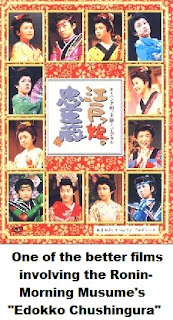 But before we pull the wings off of Richardson’s and Sakai’s sloppily researched farce, a couple of caveats. First, we’re not addressing the artistic merits and entertainment value of the book. If you just plan on reading the book to be entertained or to enjoy Sakai’s art, feel free to stop reading here-just be aware it’s a fictional account and has little to do with the historical event. But if you thought you were getting the real story or want to hear how wrong Dark Horse got it, read on. If Richardson and Sakai were writing an adaptation of the Chushingura plays and movies, we would have no problem with the comic. We own about 20 different films based on Chushingura and enjoy them all (especially 1994’s “Chushingura Gaiden Yotsuya Kaidan”-check it out if you can). But instead, they marketed their book based on the claim that it was an accurate representation of the historical events based on years of exhaustive research, and that’s simply a lie. They’ve lied to their readers, the majority of whom have little knowledge of the Ronin and have placed blind trust in the two to deliver on their promise-for example, this blurb from Comic Book Resources:
“…Richardson and "Usagi Yojimbo" artist Stan Sakai launch "47 Ronin" -- a five-issue miniseries that tells a historically accurate account of warriors who laid in wait two years to avenge the tragic death of their master only to take their own lives to be buried beside him. One of the most famous stories in Japanese history, the story of the 47 has been mythologized and retold countless times over the centuries, but with this series Richardson and Sakai hope to bring Western comics its first accurate, intensive adaptation.”
By the end of this article, not even the most diehard Richardson/Sakai supporters will be able to claim that the two worked hard to get things right.
But before we pull the wings off of Richardson’s and Sakai’s sloppily researched farce, a couple of caveats. First, we’re not addressing the artistic merits and entertainment value of the book. If you just plan on reading the book to be entertained or to enjoy Sakai’s art, feel free to stop reading here-just be aware it’s a fictional account and has little to do with the historical event. But if you thought you were getting the real story or want to hear how wrong Dark Horse got it, read on. If Richardson and Sakai were writing an adaptation of the Chushingura plays and movies, we would have no problem with the comic. We own about 20 different films based on Chushingura and enjoy them all (especially 1994’s “Chushingura Gaiden Yotsuya Kaidan”-check it out if you can). But instead, they marketed their book based on the claim that it was an accurate representation of the historical events based on years of exhaustive research, and that’s simply a lie. They’ve lied to their readers, the majority of whom have little knowledge of the Ronin and have placed blind trust in the two to deliver on their promise-for example, this blurb from Comic Book Resources:
“…Richardson and "Usagi Yojimbo" artist Stan Sakai launch "47 Ronin" -- a five-issue miniseries that tells a historically accurate account of warriors who laid in wait two years to avenge the tragic death of their master only to take their own lives to be buried beside him. One of the most famous stories in Japanese history, the story of the 47 has been mythologized and retold countless times over the centuries, but with this series Richardson and Sakai hope to bring Western comics its first accurate, intensive adaptation.”
By the end of this article, not even the most diehard Richardson/Sakai supporters will be able to claim that the two worked hard to get things right.
 Second, there are a lot of aspects of the 47 Ronin story that are open to debate. What was Asano’s motivation for attempting to kill Lord Kira? Were the Ronin operating out of loyalty or looking to win positions with new clans by their ‘demonstration’ of loyalty? Was the vendetta really in keeping with Confucian thought (the scholars of the day were split on the matter)? Was this a stellar display of samurai loyalty and honor or just a spiteful feudal drive-by carried out by a group of thuggish murderers? These and many other questions can be debated until the end of time without any concrete answers. But in this article, we’re not going to bother with addressing anything that is open to debate. Instead, we’re only going to stick with factual issues-issues that are spelled out in contemporary documents, eyewitness accounts, official reports of the Shogunate, the Ronin’s writings while in captivity after the assault on Lord Kira’s mansion, and the like. Everything here will be just the most basic facts that even an amateur historian with no prior knowledge of the event would have been able to get right with a few hours of research. Why didn’t Richardson and Sakai? We don’t know. Apparently all their so-called ‘research’ was based on the Chushingura puppet and kabuki plays along with movies based on the plays, or perhaps from reading early English language accounts of the incident that mistakenly accepted the fiction of Chushingura as fact. All of the facts you are about to read can be easily verified in most any Japanese language book on the Ronin published in the last 20 years, or in the following English language sources.
“THREE HUNDRED YEARS OF CHUSHINGURA" series in Monumenta Nipponica, 2003-06-Monumenta Nipponica is one of the most well respected academic sources on Japanese history, and their series of articles from 2003-2006 dealing with the 47 Ronin was groundbreaking, representing the first concentrated effort in the West to look at the real history behind the Chushingura legend
Beatrice Bodart-Bailey-“The Dog Shogun”-this examines Shogun Tokugawa Tsunayoshi and the falsehoods that sprang up about him. It also contains a chapter on the 47 Ronin that does an even better job of deflating the legend than we do
Stephen Turnbull-“The Revenge of the 47 Ronin”-probably the best single book devoted to the 47 Ronin, inexpensive, loaded with pictures, and readily available
Andrew Rankin-“Seppuku”-an excellent section on the Ronin with much of the latest scholarship, including the fact they didn’t commit seppuku
Professor Henry Smith-the West’s most notable 47 Ronin scholar, his homepage on the Columbia University website is a gold mine of Ronin resources and articles
So let’s get to it. On page 2, we’re introduced to Murakami Kiken, the ‘Satsuma Man’. No doubt his backstory will be revealed in future issues, but basically in the Ronin legend he’s a samurai who ran across the leader of the 47 Ronin, Oishi Kuranosuke, in Kyoto. Oishi was passed out drunk in an alley, part of his alleged ‘acting drunk to camouflage his intentions’ act (more on that later). A man from Satsuma province stumbled across him and became thoroughly disgusted, berating Oishi at length and telling him he was a disgrace and unfit to be a samurai. Months later Oishi led the attack on Lord Kira’s mansion. The Satsuma man realized his mistake and became stricken with grief that he had maligned such a fine example of samurai virtue-hence his attempts to atone at the Ronin’s graves pictured here. The problem is-the Satsuma Man never existed, as least as far as the Ronin were concerned. This was a case where an historical account (from a few years prior to the Ronin’s assault) that had nothing to do with the Ronin was grafted onto the tale years later by playwrights for dramatic impact-just like Richardson and Sakai do here, it makes for a great framing device to tell the story. But the real Satsuma man never met Oishi, never visited the Ronin’s gravesites, and his particular story took place years earlier. So scratch the Satsuma man.
Page 6-a minor quibble is that Kiken would not be referring to Emperor Higashiyama by his posthumous name while he’s still alive-he would have used “Asahito”, if indeed he used a name at all. We’ll give the comic a pass on this as that’s pretty esoteric.
There’s a charming interlude on pages 7-13 where Naganori Asano, daimyo of Ako han and the man who eventually will assault Lord Kira in Edo castle and spark off the 47 Ronin Vendetta, spends some quality time with his young daughter and wife before departing for the big city. Cute kid. Nicely illustrated touching scene. Total fiction. How do we know this? Asano’s wife and child wouldn’t be expressing regret on Asano leaving Ako for Edo. That’s because they’d BE in Edo. As part of the Shogun’s Sankin Kotai (alternate attendance) policy, a daimyo’s wife and young children were required to live in the capital city of Edo (symbolic hostages and a guarantee of good behavior by the daimyo). The comic even MENTIONS Sankin Kotai, but Richardson/Sakai apparently don’t realize its ramifications. So, we can strike all of this from the record.
Second, there are a lot of aspects of the 47 Ronin story that are open to debate. What was Asano’s motivation for attempting to kill Lord Kira? Were the Ronin operating out of loyalty or looking to win positions with new clans by their ‘demonstration’ of loyalty? Was the vendetta really in keeping with Confucian thought (the scholars of the day were split on the matter)? Was this a stellar display of samurai loyalty and honor or just a spiteful feudal drive-by carried out by a group of thuggish murderers? These and many other questions can be debated until the end of time without any concrete answers. But in this article, we’re not going to bother with addressing anything that is open to debate. Instead, we’re only going to stick with factual issues-issues that are spelled out in contemporary documents, eyewitness accounts, official reports of the Shogunate, the Ronin’s writings while in captivity after the assault on Lord Kira’s mansion, and the like. Everything here will be just the most basic facts that even an amateur historian with no prior knowledge of the event would have been able to get right with a few hours of research. Why didn’t Richardson and Sakai? We don’t know. Apparently all their so-called ‘research’ was based on the Chushingura puppet and kabuki plays along with movies based on the plays, or perhaps from reading early English language accounts of the incident that mistakenly accepted the fiction of Chushingura as fact. All of the facts you are about to read can be easily verified in most any Japanese language book on the Ronin published in the last 20 years, or in the following English language sources.
“THREE HUNDRED YEARS OF CHUSHINGURA" series in Monumenta Nipponica, 2003-06-Monumenta Nipponica is one of the most well respected academic sources on Japanese history, and their series of articles from 2003-2006 dealing with the 47 Ronin was groundbreaking, representing the first concentrated effort in the West to look at the real history behind the Chushingura legend
Beatrice Bodart-Bailey-“The Dog Shogun”-this examines Shogun Tokugawa Tsunayoshi and the falsehoods that sprang up about him. It also contains a chapter on the 47 Ronin that does an even better job of deflating the legend than we do
Stephen Turnbull-“The Revenge of the 47 Ronin”-probably the best single book devoted to the 47 Ronin, inexpensive, loaded with pictures, and readily available
Andrew Rankin-“Seppuku”-an excellent section on the Ronin with much of the latest scholarship, including the fact they didn’t commit seppuku
Professor Henry Smith-the West’s most notable 47 Ronin scholar, his homepage on the Columbia University website is a gold mine of Ronin resources and articles
So let’s get to it. On page 2, we’re introduced to Murakami Kiken, the ‘Satsuma Man’. No doubt his backstory will be revealed in future issues, but basically in the Ronin legend he’s a samurai who ran across the leader of the 47 Ronin, Oishi Kuranosuke, in Kyoto. Oishi was passed out drunk in an alley, part of his alleged ‘acting drunk to camouflage his intentions’ act (more on that later). A man from Satsuma province stumbled across him and became thoroughly disgusted, berating Oishi at length and telling him he was a disgrace and unfit to be a samurai. Months later Oishi led the attack on Lord Kira’s mansion. The Satsuma man realized his mistake and became stricken with grief that he had maligned such a fine example of samurai virtue-hence his attempts to atone at the Ronin’s graves pictured here. The problem is-the Satsuma Man never existed, as least as far as the Ronin were concerned. This was a case where an historical account (from a few years prior to the Ronin’s assault) that had nothing to do with the Ronin was grafted onto the tale years later by playwrights for dramatic impact-just like Richardson and Sakai do here, it makes for a great framing device to tell the story. But the real Satsuma man never met Oishi, never visited the Ronin’s gravesites, and his particular story took place years earlier. So scratch the Satsuma man.
Page 6-a minor quibble is that Kiken would not be referring to Emperor Higashiyama by his posthumous name while he’s still alive-he would have used “Asahito”, if indeed he used a name at all. We’ll give the comic a pass on this as that’s pretty esoteric.
There’s a charming interlude on pages 7-13 where Naganori Asano, daimyo of Ako han and the man who eventually will assault Lord Kira in Edo castle and spark off the 47 Ronin Vendetta, spends some quality time with his young daughter and wife before departing for the big city. Cute kid. Nicely illustrated touching scene. Total fiction. How do we know this? Asano’s wife and child wouldn’t be expressing regret on Asano leaving Ako for Edo. That’s because they’d BE in Edo. As part of the Shogun’s Sankin Kotai (alternate attendance) policy, a daimyo’s wife and young children were required to live in the capital city of Edo (symbolic hostages and a guarantee of good behavior by the daimyo). The comic even MENTIONS Sankin Kotai, but Richardson/Sakai apparently don’t realize its ramifications. So, we can strike all of this from the record.
 And that Asano-wow, he’s something. The comic portrays him as a compassionate family man, a man of many talents, an admired lord, a talented administrator of his lands, and the personification of idealized samurai virtues. Was he? Well, there just happens to be an excellent account of Asano’s behavior and character in the “Dokai Koshuki”, a report prepared in the 1690’s by agents of Shogun Tokugawa Tsunayoshi concerning the lives and behavior of 243 daimyo (and prepared long before Asano’s assault on Kira in Edo castle). Asano seems to have been regarded with distaste by many of his peers, and indeed seen as a hothead. The report compliments him on his intelligence and strict punishment of offences within Ako domain, but after that it’s all downhill. The report derides him for "sexual profligacy” and also notes that he sunk to promoting and rewarding retainers based on their ability to procure attractive women for him (and otherwise feed his ego). It notes that he was "only concerned with his personal amusement" and left the government of his domain in the hands of his servants.
 The report calls his retainers (Oishi Yoshio-more on him soon-being one of these) to task for the poor job they had done and brands them as disloyal for not having trained Asano properly. Asano is noted for possessing neither literary nor military skills. It appears that the chief retainers of the Asano feared losing their positions of authority within the clan and did their best to ensure Asano occupied himself primarily by indulging his libido (leaving the direct control of the clan to them). He had no children until late in life, and then only as a result of a 1694 illness that almost killed him. Without an heir, his clan would have had to forfeit their lands, so clan elders convinced him to have children (although by this time Asano had adopted his younger brother and named him heir). However, the lecherous lord continued to party like it was 1799 and continued his wastrels’ ways. So Asano was certainly no devoted family man. He had no real talents to speak of, neglected the running of his fief, and was the subject of ridicule by his contemporaries in Edo. This ridicule increased after his failed assault on Kira, where his swordsmanship and inability to kill an old man he had attacked from behind was mocked in a popular song that made the rounds of Edo at that time. In effect, Asano was much like an Edo period drunken frat boy and the ‘Brick McBurly of his Day’.
 In the garden interlude we also meet Oishi Yoshio. The comic refers to him by his title, Kuranosuke-either name is fine. Yoshio is shown as a serious and capable retainer. In a conversation with Asano, Yoshio cautions him about all the drinking, gambling, corruption, and excesses to be found in Edo. He stresses that Asano must keep his mind firmly on his duties and returning home to his family without incident. Now, given Asano’s predilection for drinking and whoring, the whole idea of Edo probably looked pretty damn good to him-a daimyo ‘Spring Break’, so Yoshio’s speech comes off as somewhat humorous. There also would have been no reason for a speech like that. Remember the Sankin Kotai policy? Asano would have already been in Edo many, many times, spent virtually half of his adult life there, and would be very familiar with the conditions inside the city and Shogun’s court.
 And Oishi was pretty much Asano’s match in the arena of partying. As Andrew Rankin lays out in his book “Seppuku”, “Today an untouchable hero, he was not always known for brilliance. As a young administrator he was nicknamed ‘daytime lantern’ (hiru-andon); in other words, he was useless. He was not good with money, and needed assistance from senior retainers when handling anything financial. His first talent seems to have been for heavy drinking”. He was also one of the vassals condemned by the “Dokai Koshuki” for neglecting Asano’s training and keeping him distracted by supplying him with women. Oishi was the mastermind of a plan where clan leadership issued devalued currency in order to boost their treasury. When the fief was confiscated as a result of Asano’s attack, everyone stuck holding this currency lost half its face value. While this won’t show up in the comic for another couple of issues, after becoming a ronin Oishi was supposed to have put on an elaborate act by consorting with prostitutes and Geisha, getting drunk every single night, and using the remnants of the clan treasury to finance it all. This was supposed to have been a ruse to convince anyone watching he had no intention of taking revenge on Kira. However, it’s far more likely he was just picking up where he left off-it was certainly no act-perhaps his title should have been Kusanosuke.
Finally, the comic moves to Edo and we meet Kira. There are a couple of minor cultural issues on Pg. 14-one of Kira’s retainers knocks on the shoji to gain entrance, whereas he would never do anything so rude in real life. He’d be announced by a bodyguard sitting outside. Sakai also renders Japanese books incorrectly, giving them a covered spine like Western books would have. No big deal, really, but just indicative of the proceedings.
Here it would probably be useful to explain the Japanese tradition of gift giving. The comic presents it as a ‘bribe’, corrupt and beneath a real samurai. However, gift giving was (and STILL is) a very important aspect of Japanese society. It was a big part of the samurai lifestyle. As Beatrice Bodart-Bailey explains in “The Dog Shogun,” ”Then as now in Japanese culture it is a form of payment for services rendered or hoped for where no formal system of remuneration exists”. In the comic, Asano at one point bluntly tells Kira that “…let ME be clear…under no circumstance will I pay a bribe to you or any other man”. But let US be clear-you can bet in real life he did, and often. And no one would have seen it as being inappropriate or out of the ordinary. One aspect of the Ronin legend that has consistently amazed us over the years is that no one seems to realize that Asano, as lord of a wealthy province, would constantly be receiving elaborate and costly gifts-or bribes-from vassals, merchants, and others seeking favor with him. So if you want to characterize gift giving as bribes and corrupt, you can start your list alphabetically with Asano.
And Oishi was pretty much Asano’s match in the arena of partying. As Andrew Rankin lays out in his book “Seppuku”, “Today an untouchable hero, he was not always known for brilliance. As a young administrator he was nicknamed ‘daytime lantern’ (hiru-andon); in other words, he was useless. He was not good with money, and needed assistance from senior retainers when handling anything financial. His first talent seems to have been for heavy drinking”. He was also one of the vassals condemned by the “Dokai Koshuki” for neglecting Asano’s training and keeping him distracted by supplying him with women. Oishi was the mastermind of a plan where clan leadership issued devalued currency in order to boost their treasury. When the fief was confiscated as a result of Asano’s attack, everyone stuck holding this currency lost half its face value. While this won’t show up in the comic for another couple of issues, after becoming a ronin Oishi was supposed to have put on an elaborate act by consorting with prostitutes and Geisha, getting drunk every single night, and using the remnants of the clan treasury to finance it all. This was supposed to have been a ruse to convince anyone watching he had no intention of taking revenge on Kira. However, it’s far more likely he was just picking up where he left off-it was certainly no act-perhaps his title should have been Kusanosuke.
Finally, the comic moves to Edo and we meet Kira. There are a couple of minor cultural issues on Pg. 14-one of Kira’s retainers knocks on the shoji to gain entrance, whereas he would never do anything so rude in real life. He’d be announced by a bodyguard sitting outside. Sakai also renders Japanese books incorrectly, giving them a covered spine like Western books would have. No big deal, really, but just indicative of the proceedings.
Here it would probably be useful to explain the Japanese tradition of gift giving. The comic presents it as a ‘bribe’, corrupt and beneath a real samurai. However, gift giving was (and STILL is) a very important aspect of Japanese society. It was a big part of the samurai lifestyle. As Beatrice Bodart-Bailey explains in “The Dog Shogun,” ”Then as now in Japanese culture it is a form of payment for services rendered or hoped for where no formal system of remuneration exists”. In the comic, Asano at one point bluntly tells Kira that “…let ME be clear…under no circumstance will I pay a bribe to you or any other man”. But let US be clear-you can bet in real life he did, and often. And no one would have seen it as being inappropriate or out of the ordinary. One aspect of the Ronin legend that has consistently amazed us over the years is that no one seems to realize that Asano, as lord of a wealthy province, would constantly be receiving elaborate and costly gifts-or bribes-from vassals, merchants, and others seeking favor with him. So if you want to characterize gift giving as bribes and corrupt, you can start your list alphabetically with Asano.
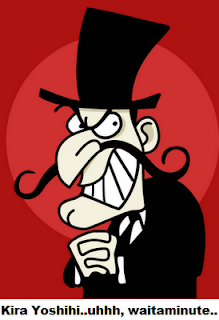 But on to Kira-Kira Yoshinaka, according to the comic. But Richardson/Sakai haven’t done their homework here either, since his name is actually Kira Yoshihisa. A letter written in 1703 specified this, and Kira’s own stylized Kao signature preserved at Kezo Temple confirms it. Either way, the comic has him as the most unpleasant, corrupt, grasping and arrogant individual this side of Snidely Whiplash. And once again, they’re wrong. For starters, no evidence exists that Kira demanded a bribe from Asano, that Asano refused him, or that it was the motivation for Asano’s attack. None. Zero. Ziltch. Everything that purports otherwise is a fictional account written years after the fact. There is nothing in Kira’s record to suggest he was anything but what he appeared to be a-a rather typical Edo period bureaucrat who did an excellent job in the performance of his duties. Far from being greedy, he seems to have been quite generous. While not a daimyo and hence not responsible for a fief, Kira made large unsolicited contributions for public works in the area near his country mansion. Kira was certainly no heroic figure, as evidenced by trying to escape Asano’s assault and not attempting to defend himself (something that made him a subject of derision from his contemporaries). Still, Kira was no villain. He was made into one because (Bodart-Bailey again, speaking on the vilification of Kira at the hands of playwrights) “Lauding the slaying of Kira meant praising an act of breaking the law. Hence Kira’s vilification was necessary to justify such illegal behavior as being provoked by an even worse state of affairs”.
 Why, then, did Asano attack him? Certainly there had to be some reason. But the cold, hard truth is that no one knows. Asano refused to tell anyone the reason, and only he knew it. This indicates that divulging the reason would cause him to be seen in an even more negative light. Stephen Turnbull’s “The Revenge of the 47 Ronin” gives a very likely scenario. "By 1701 the 60-year-old-Kira Yoshihisa had served successive Shoguns as a loyal and utterly reliable master of court ceremonies for about 40 years. It was a role that required minute precision to detail and the ability to organize with clockwork precision. A man in that position, one can safely assume, did not suffer fools gladly. When faced, therefore, with having to instruct in etiquette a young daimyo to whom court ceremonial was much less interesting than court ladies, and a man who appeared ignorant of the most basic learning and yet enjoyed an income 11 times greater than his stuffy old teacher, Yoshihisa's self-control was to be tested to the limit". Asano would very likely have been reprimanded sternly by Kira for slackness in his studies, and it’s very easy to imagine he would have chafed and done a slow burn over it, resulting in his backstabbing ambush of Kira. In all fairness, it has to be pointed out that this is also just idle speculation-however, it’s speculation that makes more sense than the Chushingura version.
And then there's Kamei-sama-or since Richardson/Sakai seem to think ‘Sama’ is a name and not the honorific suffix it is, Kamei Sama. In the comic, Kamei is an even bigger hothead than Asano. He’s always wanting to protect Asano’s honor and reaching for his sword to attack Kira, but always talked down by Asano. Luckily for Kamei, his vassals, unknown to him, have given that evil ‘ol Kira the bribes he craves-so he’s in Kira’s favor. Now, historically, Kamei-sama is quite important. He’s important because any 47 Ronin account that contains him can easily be relegated to the realm of fiction. You see, there was no Kamei-sama assisting Asano. No, Kamei Korechika, the lord of Tsuwano domain in Iwami province, had held in 1698 the position Asano held in 1701. Historically, assisting Asano was Date Muneharu (also known as Muratoyo), the daimyo of Yoshida han in Iyo province. So we can also scratch Kamei Sama from our august proceedings.
We can also discount the story of Kamei’s vassals gifting Kira without their Lord’s knowledge. This fictional account first appeared in a Chushingura play almost 50 years after the fact in 1748, and was said to have taken place in 1698 when Kamei really was under Kira’s tutelage (but of course, there’s no documentation for it-even the Kamei family records fail to mention it). Further betraying its bogus nature, the incident with Kamei-sama was quickly moved by various works of fiction to 1701 and replaced Date Muneharu to give the episode more impact.
Kira’s evil nature is further underlined on page 19 when Kira ‘reminds’ Asano he needs to replace 200 tatami mats in the receiving hall by tomorrow. The dastardly villain had earlier told Asano they didn’t need to be replaced, but that was before he didn’t get his bribe, y’know. So Asano is faced with a seemingly impossible task (which humorously causes Kamei Sama to reach for his sword again), but Asano’s such a tremendously talented administrator and inspires such confidence in his vassals, and yes, even the little men that make tatami mats, that he pulls it off. You know where this is going, don’t you? Yep-another totally fictional episode, presented most memorably in Inagaki Hiroshi’s 1962 film version of Chushingura (where 500 mats needed to be replaced and only accomplished by having an Asano vassal substitute himself for a matmaker in a drinking contest). It’s a beautiful, well done and stirring movie, but it’s also a work of unadulterated fiction.
Why, then, did Asano attack him? Certainly there had to be some reason. But the cold, hard truth is that no one knows. Asano refused to tell anyone the reason, and only he knew it. This indicates that divulging the reason would cause him to be seen in an even more negative light. Stephen Turnbull’s “The Revenge of the 47 Ronin” gives a very likely scenario. "By 1701 the 60-year-old-Kira Yoshihisa had served successive Shoguns as a loyal and utterly reliable master of court ceremonies for about 40 years. It was a role that required minute precision to detail and the ability to organize with clockwork precision. A man in that position, one can safely assume, did not suffer fools gladly. When faced, therefore, with having to instruct in etiquette a young daimyo to whom court ceremonial was much less interesting than court ladies, and a man who appeared ignorant of the most basic learning and yet enjoyed an income 11 times greater than his stuffy old teacher, Yoshihisa's self-control was to be tested to the limit". Asano would very likely have been reprimanded sternly by Kira for slackness in his studies, and it’s very easy to imagine he would have chafed and done a slow burn over it, resulting in his backstabbing ambush of Kira. In all fairness, it has to be pointed out that this is also just idle speculation-however, it’s speculation that makes more sense than the Chushingura version.
And then there's Kamei-sama-or since Richardson/Sakai seem to think ‘Sama’ is a name and not the honorific suffix it is, Kamei Sama. In the comic, Kamei is an even bigger hothead than Asano. He’s always wanting to protect Asano’s honor and reaching for his sword to attack Kira, but always talked down by Asano. Luckily for Kamei, his vassals, unknown to him, have given that evil ‘ol Kira the bribes he craves-so he’s in Kira’s favor. Now, historically, Kamei-sama is quite important. He’s important because any 47 Ronin account that contains him can easily be relegated to the realm of fiction. You see, there was no Kamei-sama assisting Asano. No, Kamei Korechika, the lord of Tsuwano domain in Iwami province, had held in 1698 the position Asano held in 1701. Historically, assisting Asano was Date Muneharu (also known as Muratoyo), the daimyo of Yoshida han in Iyo province. So we can also scratch Kamei Sama from our august proceedings.
We can also discount the story of Kamei’s vassals gifting Kira without their Lord’s knowledge. This fictional account first appeared in a Chushingura play almost 50 years after the fact in 1748, and was said to have taken place in 1698 when Kamei really was under Kira’s tutelage (but of course, there’s no documentation for it-even the Kamei family records fail to mention it). Further betraying its bogus nature, the incident with Kamei-sama was quickly moved by various works of fiction to 1701 and replaced Date Muneharu to give the episode more impact.
Kira’s evil nature is further underlined on page 19 when Kira ‘reminds’ Asano he needs to replace 200 tatami mats in the receiving hall by tomorrow. The dastardly villain had earlier told Asano they didn’t need to be replaced, but that was before he didn’t get his bribe, y’know. So Asano is faced with a seemingly impossible task (which humorously causes Kamei Sama to reach for his sword again), but Asano’s such a tremendously talented administrator and inspires such confidence in his vassals, and yes, even the little men that make tatami mats, that he pulls it off. You know where this is going, don’t you? Yep-another totally fictional episode, presented most memorably in Inagaki Hiroshi’s 1962 film version of Chushingura (where 500 mats needed to be replaced and only accomplished by having an Asano vassal substitute himself for a matmaker in a drinking contest). It’s a beautiful, well done and stirring movie, but it’s also a work of unadulterated fiction.
 But for real jaw-dropping, stupefying, “what orifice did they pull this out of” impact, nothing can top the account of Asano’s actual attack on Lord Kira detailed on pages 22-26. Here’s the Dark Horse version. Kira enters a room full of assembled dignitaries and thanks them all for their hard work. Everyone, that is, except for Asano, who he (among other pleasantries) calls ‘less gifted, ‘less able’, a lousy listener who does lousy work, and an embarrassment. Our old friend Kamei-sama goes to draw his sword to stick up for his pal but is dissuaded by the stalwart Asano. As Asano exits the room, Kira can’t resist a parting shot and calls him a stupid country farmer. NOW Asano draws his sword and charges Kira, but drops it and apologizes profusely when Kira reminds him of the consequences of drawing his sword in the Shogun’s castle. Well, that mean ol’ bastard Kira walks right up to Asano and kicks him in the face, then strolls off chortling and heaping more verbal abuse on him! Asano throws his short sword at Kira to get his attention, burying it in the woodwork next to his head. Then he pulls his long sword (Sakai mistakenly portrays all the samurai wearing two swords, whereas indoors they would only be carrying their short sword) and charges Kira, wounding him in the face. Other samurai restrain Asano while Kamei Sama bleats out a protest (he’s quite the busybody for someone who didn’t exist). Asano calmly tells Kamei to stand down and stoically states he will accept the consequences of his actions. Hoo-boy. We’re surprised Kira wasn’t shown dancing a celebratory jig from “Riverdance” as Asano was escorted out.
Now, as it happens, there exists an eyewitness account of Asano’s assault. It was written by one Kajikawa Yosobei, who was a supervisory official in the Ooku (the women’s quarters of Edo Castle). Yosobei was chatting to Kira regarding rescheduling the giving of gifts from the Shogun’s consort to the Emperor’s representatives. Here’s his account of the attack: Asano appeared from nowhere, began screaming, and attacked Kira from behind, slightly wounding him in the back. Shocked, Kira whirled around to face Asano, began to back pedal, and was slightly wounded again on his face, causing him to fall to the ground. Kajikawa restrained Asano. The other samurai in the room came to Kajikawa’s aid and drug Asano into the Willow Room, with the daimyo of Ako screaming the whole time.
Now tell us-
1) If you claim to be writing a historically accurate account, how in the world do you totally ignore the ONLY EYEWITNESS ACCOUNT OF THE ASSAULT?
2) Even worse, why would you come up with an alternate universe where VIRTUALLY NOTHING happens the way it did? The Dark Horse account is even more fanciful than the most hero-worshipping of the 47 Ronin films or plays.
3) Asano sure sounds like a psycho, doesn’t he? Lousy swordsman, too, just like the Shogunal report said.
But for real jaw-dropping, stupefying, “what orifice did they pull this out of” impact, nothing can top the account of Asano’s actual attack on Lord Kira detailed on pages 22-26. Here’s the Dark Horse version. Kira enters a room full of assembled dignitaries and thanks them all for their hard work. Everyone, that is, except for Asano, who he (among other pleasantries) calls ‘less gifted, ‘less able’, a lousy listener who does lousy work, and an embarrassment. Our old friend Kamei-sama goes to draw his sword to stick up for his pal but is dissuaded by the stalwart Asano. As Asano exits the room, Kira can’t resist a parting shot and calls him a stupid country farmer. NOW Asano draws his sword and charges Kira, but drops it and apologizes profusely when Kira reminds him of the consequences of drawing his sword in the Shogun’s castle. Well, that mean ol’ bastard Kira walks right up to Asano and kicks him in the face, then strolls off chortling and heaping more verbal abuse on him! Asano throws his short sword at Kira to get his attention, burying it in the woodwork next to his head. Then he pulls his long sword (Sakai mistakenly portrays all the samurai wearing two swords, whereas indoors they would only be carrying their short sword) and charges Kira, wounding him in the face. Other samurai restrain Asano while Kamei Sama bleats out a protest (he’s quite the busybody for someone who didn’t exist). Asano calmly tells Kamei to stand down and stoically states he will accept the consequences of his actions. Hoo-boy. We’re surprised Kira wasn’t shown dancing a celebratory jig from “Riverdance” as Asano was escorted out.
Now, as it happens, there exists an eyewitness account of Asano’s assault. It was written by one Kajikawa Yosobei, who was a supervisory official in the Ooku (the women’s quarters of Edo Castle). Yosobei was chatting to Kira regarding rescheduling the giving of gifts from the Shogun’s consort to the Emperor’s representatives. Here’s his account of the attack: Asano appeared from nowhere, began screaming, and attacked Kira from behind, slightly wounding him in the back. Shocked, Kira whirled around to face Asano, began to back pedal, and was slightly wounded again on his face, causing him to fall to the ground. Kajikawa restrained Asano. The other samurai in the room came to Kajikawa’s aid and drug Asano into the Willow Room, with the daimyo of Ako screaming the whole time.
Now tell us-
1) If you claim to be writing a historically accurate account, how in the world do you totally ignore the ONLY EYEWITNESS ACCOUNT OF THE ASSAULT?
2) Even worse, why would you come up with an alternate universe where VIRTUALLY NOTHING happens the way it did? The Dark Horse account is even more fanciful than the most hero-worshipping of the 47 Ronin films or plays.
3) Asano sure sounds like a psycho, doesn’t he? Lousy swordsman, too, just like the Shogunal report said.
 Ironically, the book ends with Kamei-sama stating “I fear this can only end badly”. He’s certainly right if he’s talking about the comic series.
For most of this stuff, we put the onus on Richardson as he’s the writer. However, Sakai has more than his share of culpability. Let’s take a look at a single panel-the nice looking splash page featuring the Shogun’s Palace (actually the Shogun’s Castle) from page 13. It contains a multitude of cultural and historical errors ranging from the minor to ridiculously obvious. For starters, Sakai has town buildings and shops located directly outside of Edo castle’s walls. This is incorrect-there were daimyo mansions ringing Edo castle’s outer walls, part of its defense plan. And even they wouldn’t have been next to the walls-the castle had (still has) massive moats. Sakai has the walls with gun loopholes that were built out of plaster constructed out of stone instead. He has the tenshu of Edo castle right next to the outer walls when it would have been located far, far beyond them with a maze of enclosures and other buildings in between. He has the Edo Castle tenshu rendered as a double structure (much like the current versions of Odawara or Nagoya castle) instead of the single five story structure it was. But that really doesn’t matter, because in 1701 EDO CASTLE DIDN’T HAVE A TENSHU. It burned down in the great Edo fire of 1657 and was never rebuilt. Sakai does state in an interview given for the book that “I learned that that part of the castle has burned down twice since this (Asano’s assault on Lord Kira) happened”, but it appears he was talking about the Hall Of Pines and not the tenshu. Sakai later goes on to add that “most of it I just made up”. He also states that “The 47 were ordered to commit seppuku by the Shogunate, and they did it at Sengakuji Temple.” In fact, only 46 were sentenced to death and only one of them committed seppuku, the rest being beheaded in mock seppuku ceremonies. And NONE of their deaths happened at Sengakuji Temple (hard as it is to believe ;) , Buddhist temples aren’t particularly happy being used as execution grounds), but at the four separate daimyo mansions they were being held in. So much for Sakai’s self-styled rigorous research ethic and “tremendous research library”. While Sakai does seem marginally better informed than Richardson about the actual history of the Ronin, for some reason he didn’t feel the need to let Mike in on the secret. Why? Probably because he had little interest in sticking to a historically accurate representation of the Ronin, wanting instead to do a standard jidaigeki-fueled fantasy treatment.
We’re not going to be reviewing the last four issues of this series-frankly, our heart wouldn’t be able to take the strain and our head would explode. But here are a few fearless predictions of what you’ll probably see (FANTASY) followed by what really was (FACT):
Ironically, the book ends with Kamei-sama stating “I fear this can only end badly”. He’s certainly right if he’s talking about the comic series.
For most of this stuff, we put the onus on Richardson as he’s the writer. However, Sakai has more than his share of culpability. Let’s take a look at a single panel-the nice looking splash page featuring the Shogun’s Palace (actually the Shogun’s Castle) from page 13. It contains a multitude of cultural and historical errors ranging from the minor to ridiculously obvious. For starters, Sakai has town buildings and shops located directly outside of Edo castle’s walls. This is incorrect-there were daimyo mansions ringing Edo castle’s outer walls, part of its defense plan. And even they wouldn’t have been next to the walls-the castle had (still has) massive moats. Sakai has the walls with gun loopholes that were built out of plaster constructed out of stone instead. He has the tenshu of Edo castle right next to the outer walls when it would have been located far, far beyond them with a maze of enclosures and other buildings in between. He has the Edo Castle tenshu rendered as a double structure (much like the current versions of Odawara or Nagoya castle) instead of the single five story structure it was. But that really doesn’t matter, because in 1701 EDO CASTLE DIDN’T HAVE A TENSHU. It burned down in the great Edo fire of 1657 and was never rebuilt. Sakai does state in an interview given for the book that “I learned that that part of the castle has burned down twice since this (Asano’s assault on Lord Kira) happened”, but it appears he was talking about the Hall Of Pines and not the tenshu. Sakai later goes on to add that “most of it I just made up”. He also states that “The 47 were ordered to commit seppuku by the Shogunate, and they did it at Sengakuji Temple.” In fact, only 46 were sentenced to death and only one of them committed seppuku, the rest being beheaded in mock seppuku ceremonies. And NONE of their deaths happened at Sengakuji Temple (hard as it is to believe ;) , Buddhist temples aren’t particularly happy being used as execution grounds), but at the four separate daimyo mansions they were being held in. So much for Sakai’s self-styled rigorous research ethic and “tremendous research library”. While Sakai does seem marginally better informed than Richardson about the actual history of the Ronin, for some reason he didn’t feel the need to let Mike in on the secret. Why? Probably because he had little interest in sticking to a historically accurate representation of the Ronin, wanting instead to do a standard jidaigeki-fueled fantasy treatment.
We’re not going to be reviewing the last four issues of this series-frankly, our heart wouldn’t be able to take the strain and our head would explode. But here are a few fearless predictions of what you’ll probably see (FANTASY) followed by what really was (FACT):
 FANTASY: The Ronin will invade Kira’s heavily fortified fortress, swarming with elite guards and booby traps. They take great care to spare innocent servants. Even though heavily outnumbered, they’ll decimate the opposition and ferret out Kira’s spider hole.
FACT: Kira’s mansion was just a standard Edo period hatamoto mansion-no traps, no fortifications other than an outside wall that they all had. The Ronin outnumbered Kira’s guards by anywhere from 2-1 to 16-1 (depending on what account you believe-2-1 actually seems the most likely). They slaughtered several household staff. They did, however, decimate the opposition and ferret out Kira’s spider hole. Having armor and arms and being awake when your enemy is sleeping, unarmed, and unarmored does that.
FANTASY: Terasaka Kichiemon, the 47th Ronin will after the assault be ordered by Oishi to carry news of their success to Asano’s widow. Terasaka this way avoids being sentenced to death with the other 46.
FACT: Terasaka was ordered to leave the group right before the raid, not to inform anyone of anything but rather because the Ronin as a whole decided his rank was too low for him to be part of the group. This is borne out by the Ronin’s own writings while in captivity and awaiting sentencing. He did indeed avoid their fate. There’s an excellent episode of the TV drama ‘Abarenbo Shogun’ where Terasaka royally rips the Ronin and Asano for not thinking of their families and vassals when pursuing their violent goals.
FANTASY: The Ronin will invade Kira’s heavily fortified fortress, swarming with elite guards and booby traps. They take great care to spare innocent servants. Even though heavily outnumbered, they’ll decimate the opposition and ferret out Kira’s spider hole.
FACT: Kira’s mansion was just a standard Edo period hatamoto mansion-no traps, no fortifications other than an outside wall that they all had. The Ronin outnumbered Kira’s guards by anywhere from 2-1 to 16-1 (depending on what account you believe-2-1 actually seems the most likely). They slaughtered several household staff. They did, however, decimate the opposition and ferret out Kira’s spider hole. Having armor and arms and being awake when your enemy is sleeping, unarmed, and unarmored does that.
FANTASY: Terasaka Kichiemon, the 47th Ronin will after the assault be ordered by Oishi to carry news of their success to Asano’s widow. Terasaka this way avoids being sentenced to death with the other 46.
FACT: Terasaka was ordered to leave the group right before the raid, not to inform anyone of anything but rather because the Ronin as a whole decided his rank was too low for him to be part of the group. This is borne out by the Ronin’s own writings while in captivity and awaiting sentencing. He did indeed avoid their fate. There’s an excellent episode of the TV drama ‘Abarenbo Shogun’ where Terasaka royally rips the Ronin and Asano for not thinking of their families and vassals when pursuing their violent goals.
 FANTASY: It will be gleefully reported that Kira’s grandson, Yoshichika, was forced to commit seppuku for not having successfully defended his grandfather (despite incurring several wounds in doing so). The Uesugi family (Kira’s relatives by marriage) will be said to have had its domain cut almost in half for not sending troops to attack the Ronin at Sengakuji Temple after the raid.
FACT: The document this was based on has been shown to be a forgery prepared much later. Instead, Yoshichika was banished to Kai province and the Kira family lost its hereditary position as ‘Master Of Shogunal Ceremony’. They later regained their hatamoto status but didn’t regain the office, as it was now the hereditary post of another clan. Nothing happened to the Uesugi clan. The last thing the Shogunate would have wanted was to have unsanctioned warfare and chaos break out on the streets of Edo.
FANTASY: It will be gleefully reported that Kira’s grandson, Yoshichika, was forced to commit seppuku for not having successfully defended his grandfather (despite incurring several wounds in doing so). The Uesugi family (Kira’s relatives by marriage) will be said to have had its domain cut almost in half for not sending troops to attack the Ronin at Sengakuji Temple after the raid.
FACT: The document this was based on has been shown to be a forgery prepared much later. Instead, Yoshichika was banished to Kai province and the Kira family lost its hereditary position as ‘Master Of Shogunal Ceremony’. They later regained their hatamoto status but didn’t regain the office, as it was now the hereditary post of another clan. Nothing happened to the Uesugi clan. The last thing the Shogunate would have wanted was to have unsanctioned warfare and chaos break out on the streets of Edo.
 FANTASY: The Ronin will be shown stoically and heroically performing seppuku (ritual suicide). It seems Sakai plans to have this happen at Sengakuji.
FACT: As we outlined above, the deaths of the Ronin occurred at the four separate daimyo mansions they were being held at. Only one of the 46 actually committed seppuku. The remaining 45 were beheaded in mock seppuku ceremonies. This is borne out by the official accounts given by the presiding officials at each mansion. Now, given that the comic is pure fantasy, that Koike Kazuo is listed as an editorial consultant and he’s the creator of “Lone Wolf And Cub”-wouldn’t it kick ass to have Shogunal Executioner Ogami Itto carrying out the executions ? It’d be worth picking up just for that.
So thanks for nothing, Dark Horse. You had a chance to live up to your reputation and help bring the real story of the Ronin to a mass market audience. Instead, you couldn’t even keep the promises of historical accuracy you made in your press releases and gave thousands of readers a fantasy account that they’ll believe because you told them they can. Richardson and Sakai should be ashamed of themselves. If as they claim they truly believe in the virtues that the fantasy version of the Ronin represent (like honor and personal responsibility) they’d at least put a disclaimer on the inside cover of future issues that declares their adaptation is based on the Chushingura plays and movies and not on historical fact. Even a cad who’s as evil, corrupt, and jaded as say…the historical Asano would think that’s fair.
FANTASY: The Ronin will be shown stoically and heroically performing seppuku (ritual suicide). It seems Sakai plans to have this happen at Sengakuji.
FACT: As we outlined above, the deaths of the Ronin occurred at the four separate daimyo mansions they were being held at. Only one of the 46 actually committed seppuku. The remaining 45 were beheaded in mock seppuku ceremonies. This is borne out by the official accounts given by the presiding officials at each mansion. Now, given that the comic is pure fantasy, that Koike Kazuo is listed as an editorial consultant and he’s the creator of “Lone Wolf And Cub”-wouldn’t it kick ass to have Shogunal Executioner Ogami Itto carrying out the executions ? It’d be worth picking up just for that.
So thanks for nothing, Dark Horse. You had a chance to live up to your reputation and help bring the real story of the Ronin to a mass market audience. Instead, you couldn’t even keep the promises of historical accuracy you made in your press releases and gave thousands of readers a fantasy account that they’ll believe because you told them they can. Richardson and Sakai should be ashamed of themselves. If as they claim they truly believe in the virtues that the fantasy version of the Ronin represent (like honor and personal responsibility) they’d at least put a disclaimer on the inside cover of future issues that declares their adaptation is based on the Chushingura plays and movies and not on historical fact. Even a cad who’s as evil, corrupt, and jaded as say…the historical Asano would think that’s fair.
 While manga treatments of famous works of Japanese literature are common in Japan, they’re virtually unknown in the West. Part of this is due to the long-standing prejudice in Western societies that ‘comics’ are nothing more than entertainment for children. Over the past 25 years or so, the graphic novel has changed that way of thinking. While they often provide the adventures of our favorite super-heroes, they’ve also provided a venue for talented writers and artists to craft serious stories aimed squarely at adults. As the square bound graphic novel has become accepted reading matter for adults, works that one would never have imagined appearing in comics form have appeared-among those two recent black-and-white releases from Shambhala Publications. Today we’ll be examining how the ‘graphic approach’ has worked out for Musashi Miyamoto’s “The Book of Five Rings” and Chozanshi Issai’s “The Demon’s Sermon on the Martial Arts”.
 Most readers will already be familiar with swordsman Musashi Miyamoto and his famed Edo period sword treatise “The Book of Five Rings” (“Go Rin No Sho”). Using the format of the traditional five Japanese elements of earth, wind, water, fire, and emptiness (often expressed as the void or the sky), Musashi presents the thoughts behind his style of martial arts and also how they can be applied in life to virtually any situation. The ‘Earth’ chapter gives an overview of the martial arts and weaponry in general. Musashi explains the techniques and philosophy of his style, ‘Niten Ichi-ryu’ (‘two heavens as one’, the famous two swords style), in ‘Water’. Warfare (as opposed to dueling) is the subject of ‘Fire’. The shortcomings of other sword styles as Musashi sees them are presented in ‘Wind’. The proper frame of mind for learning comprises the final chapter, ‘Emptiness’. We’ll give some thoughts on Musashi’s work itself before we look at how it is affected by being put into comics form.
 “The Book of Five Rings” is far from the only sword treatise penned by an itinerant swordsman during the Edo period, but it’s certainly the most famous, aided immensely by Musashi becoming famous through his exposure in Yoshikawa’s Eiji’s 1930’s novel ’Musashi’. One often hears of it being used by Japanese sararimen to find success in business as well as life. Is there any justification for this? Insofar as Musashi points out that the concepts behind his philosophy can be applied to any job or career, sure. Hard work, constant practice, a hands on style, an aggressive (but not careless) attitude, and above all, adaptability to changing circumstances will help to make one successful in virtually any endeavor. These values are certainly not limited to the martial arts, nor are the Buddhist and Confucian concepts behind them. However, we suppose it’s as good a place to learn them as any-and as shown here, you can even use the sword techniques to impress the chicks!
  We now move on from the practical world of Musashi to a whimsical world of demons and talking animals in “The Demon’s Sermon on the Martial Arts” (“Tengu Geijutson”). The author of this Edo period work was (the pen name of Niwa Tadaaki), a samurai from Sekiyado han in Shimosa province. Chozanshi, while interested in swordsmanship, was primarily known as a bunjin (what we’d call a ‘man of letters’ in the West). “Demon’s Sermon” is actually somewhat of a compilation of two of his efforts-the title work along with a selection of short stories from his “Inaka Soshi” (The Hayseed Taoist). These stories, despite the book’s title, are far more concerned with Buddhist and Confucian concepts than the techniques and execution of swordsmanship (most of the martial arts discussion takes place between the tengu).
  The story revolves around a young would-be swordsman who ventures into the deep woods to seek the instruction of the tengu, the mythical bird-men of Japan who were said to have instructed the legendary hero Minamoto no Yoshitsune in the ways of warfare. Coming across a group of them holding a discussion in a tree, he settles in to eavesdrop and benefit from their wisdom. The title is somewhat of a misnomer-tengu aren’t demons in the Western sense of the word (that being malevolent beings or spirits from Hell) but more like ‘forest spirits’. Wilson here chooses to break “The Demon’s Sermon” into several parts and use it as a framework to structure the shorter stories. This allows the short stories to reinforce and expand upon the concepts brought up by the tengu, as well as letting the tengu introduce the concepts to be spotlighted in the short stories. An interesting choice by Wilson, it helps to tie the work together as a unified whole rather than a series of stories. Many of the ideas are the same as those looked at by Musashi in “Five Rings”, again showing how Buddhist and Confucian ideals found their way into sword training. The tengu discuss the concept of no-mind or emptiness, using your chi (the energy that flows through everything) correctly, the importance of practice and discipline, and how adaptability and lack of attachment are vital. Humorously, the tengu also find most martial arts schools to be lacking in their instruction with too great an emphasis on rigid technique.
  The short stories are primarily Buddhist parables told through the eyes of a variety of talking animals. Using animals to illustrate life lessons is a well-known aspect of Western storytelling, and it was the same in Japan. Yose (storytelling) theater was quite popular in the Edo period and many of its stories were exactly like the selections included in “Demon’s Sermon”. Included are Transformation of the Sparrow and the Butterfly, Meeting the Gods of Poverty in a Dream, The Greatest Joys of the Cicada and Its Cast-Off Shell, The Owl’s Understanding, The Centipede Questions the Snake, The Toad’s Way of the Gods, and The Mysterious Technique of the Cat. The animals (for the most part not goofy looking anamorphic creatures but what they look like in nature) delve into matters such as being content with one’s station in life, the impermanent nature of all things, the shortcomings of learned technique, and again, the importance of being able to adapt to changing circumstances. The most well-known story of the bunch is The Mysterious Technique of the Cat. When an exceptionally gifted rat invades the ramshackle home of a ronin, the rodent proves itself to be a superior foe, evading all attempts to capture or kill it. When even the most talented mousers in the area fall to the rat’s vicious attacks, it falls to an enfeebled older cat to confront the rat. It defeats it effortlessly to the amazement of all, leading to pleas from the other cats for an explanation of his amazing technique. And as will be of no surprise to readers of the other stories, he accomplished it by using ‘no technique’. Parables such as this were intended to make somewhat complex Buddhist concepts relatable and understandable to commoners and were a large part of the repertoire of traveling monks and priests. From a sociological standpoint they also were a way for the monks and samurai to make the peasants happy with their social status and not try to better their positions by rebelling against those above them.


