Saturday, October 25, 2008

My Japanese Coach: A Pocket Sized Language Course


Ubisoft's newest edition to their series of language education programs for the Nintendo DS is 'My Japanese Coach'. A recurrent topic on the Samurai Archives is people wondering how to begin learning Japanese without actually having to attend classes. While there's no software or reading program developed that can take the place of a classroom, My Japanese Coach is a surprisingly involved and well done effort that will give beginners a solid grounding in grammar, sentence structure, writing, and vocabulary. The game claims to have been 'created in association with Japanese teachers' (just who isn't specified), and uses the Kevin Atkinson 2000 Dictionary and the 1997 Word.Net 1.6 by Princeton University.


The program starts you off with a placement test-50 multiple choice questions with three minutes to answer them. Miss two in a row and you're out. Based on your results, the program will skip you forward several lessons (a maximum of 10 if you answer all 50 correctly). There are over 1,000 lessons, all with a minimum of 10 new vocabularly words to master. Each word in the list can be listened to for pronunciation, recorded and played back to hear your efforts (and played along with the correct version for comparison), and there's also an onscreen stylus pad for practicing writing in kana or kanji. The first 100 lessons contain instruction from an animated teacher, Haruka, and do a good job of developing and building upon your skills as you progress in the program (the remainder of the 900+ lessons are open lessons with 10 words each-meaning that you'll know over 10,000 Japanese words if you finish them all). For example, lessons 17-21 are Kana 5, Greetings, Verbs In Sentences, Kana 6, and Informal Verbs. It teaches the basics of kana early on and encourages the reader to scrap the use of romaji as quickly as possible. After lesson 43, kanji is introduced. Proper sentence structure and grammar is emphasized, as is mastering each lesson before you move on to the next one. In fact, the program requires you to 'master' each word in the lesson before it unlocks the next lesson.


Words are mastered by playing through several types of games, many of which seem silly at first (but have an underlying rationale). There's Multiple Choice, Hit-A-Word, Word Search, Flash Cards, Memory, Bridge Builder (sentence construction), Spelltastic, Fill-In-The-Blank, Write Cards, Fading Characters, Scrolls, and Yomi. I found the write cards and flash cards to be very helpful, as each flash card has a time limit and the write cards (where it gives you a Japanese word in English or kana to write out in kana or kanji) give good timed practice as well. The games can be set from easy to difficult as well. The stylus recognition is surprisingly good-almost generous-but brutal on insisting on proper stroke order (occasionally getting the stroke order wrong). Overall it's much better than the stylus pad on my $300 Canon V90 Wordtank. The games can be (and HAVE to be, in order to master words) played apart from the lessons as often as desired, and add points to your mastery skill for individual words. The game ranks you (by showing what age level of native speaker you could talk to effectively) and also keeps track of your stats for each game, letting you see a graph of your progress on each.


In addition, the program serves as a pretty decent basic wordtank as well. All of the over 10,000 words available are in a dictionary with their kanji renderings and a simple English translation (sometimes a little too simple for English words with multiple meanings). You can also get an animated display of proper stroke order and sound for proper pronunciation. If it's a verb, you can bring up a list of conjugations. You can search with an on screen QWERTY keyboard. There's also a phrasebook that lets you search by category or key words. Finally, there's a sketchpad that allows you to 'draw what you need', so they say, if you're in Japan and the proper words escape you.


My Japanese Coach isn't without its shortcomings, however. Simple but vital things such as combining kana to form new sounds or using the character for 'ha' for the subject marker 'wa' (or 'wo' for 'o' on an object) are glossed over quickly or not mentioned. It tells you to see if you can figure out how verbs are conjugated without confirming this information (until a lesson that comes along much later). Sometimes the context is confusing to a beginner (like the particle に is introduced-the program correctly ID's it as 'to', but for some reason they have the particle と next to it as well). Some of the vocabulary words seem a bit advanced for beginners as well, and not all that useful in everyday speech. It also would have been nice to have a more involved placement test, so intermediate speakers could skip straight to the later lessons.


All in all, My Japanese Coach is an excellent low cost program (at about $29) for beginners. It's a no-brainer if you already have a DS (a very small unit, easily carried around in a pocket, purse, or briefcase) and want to learn Japanese, and I'd even say it's worth buying a DS just to have this program. Don't be fooled by the claim on the box that you can "learn Japanese in only 15 minutes a day". Sure, you'll learn a few odd words, but like everything else in life, you'll get out of it what you put into it. Practice hard and often (just like the program encourages you to do). It's no substitute for the feedback and individualized instruction a live teacher can give you, but it's the next best thing.

Monday, October 20, 2008

Film Review: Death Trance


Death Trance, Directed by Yuji Shimomura, gives the viewer a pretty bare-boned plot: Essentially a super-human fighter steals a coffin from a temple that is supposed to allow the one who opens it to have his biggest desire granted. In this mish-mash cross between a kung-fu movie, Mad Max, and Samurai-chambara, 4 Characters fight it out to steal the magic coffin from each other. That's basically the whole plot right there. Who are these four stolid warriors?

1. Sid (or, Totally Pointless Ronin with 80's Hair) This
pointless character is played by Steven Seagal's son Kentaro. The character does nothing to advance the plot (not that there is much of one to begin with), and Kentaro just plain lacks any of the screen presence or bad-ass charisma of his father.

2. Grave (or, Eternally hungry super human number one fighter) Played by Tak
Sakaguchi - Sakaguchi makes up for all of Kentaro Seagal's faults as an actor with charisma and stage presence in spades. Well, as long as he doesn't open his mouth. He owns every scene he's in with a Mifune-like flair, but for some reason, all of his lines fall flat. His action scenes are lightning fast and rock-solid whereas Kentaro's one marginal fight scene is pretty weak in comparison.

3. Yuri (or, Pa
le mysterious death angel lady) More of a plot device than a character, she sort of moves the plot along with the main protagonist:

4. Ryuen (or, Naive Over-His-Head Junior Priest) Tasked by the bishop of his destroyed temple with bringing back the coffin. He's the joe everyman in this crazy story of swordplay, blood, vampires, creepy little kids in kimonos, and kung-fu flying action.


Director Shimomura, who was action director for Ryuhei Kitamura on both "Aragami" and "Versus", obviously brought this experience with him. "Death Trance" is smoother than versus but not as much so as "Aragami", and the action is a combination of both films. I actually watched this movie specifically to see Kentaro Seagal, to see if he has inherited any of his father's screen presence or action skills. He disappoints in both areas. Tak Sakaguchi absolutely steals the show as the super human killing machine. I almost wonder if he actually studied Toshiro Mifune's swagger and bravado - he pulls it off brilliantly. Unfortunately he utterly lacks any power with his lines. Unlike Mifune, his voice definitely does not even come close to matching his swagger in this movie.

The locations and costumes were great, as was the washed out color most of the movie was filmed in, it gives it a dark and stylized look. All in all an OK popcorn movie with lots of katana, gun, and fist action, with some gunkata, capoeira, vampires, a motorcycle, and a bazooka thrown in for good measure. Final verdict:

Three Smilin' Sammys out of five:

Thursday, October 16, 2008

Questions Round 2 - Anthony J. Bryant

Here are some more questions that came in from the blog for Tony Bryant. Thanks everyone for participating, and thanks to Tony for agreeing to the interview in the first place.


Dear Sir Anthony,

Studying history requires us to investigate the past. Like a detective, we start with the easy, known pieces of historical information. We then shuffle other pieces around to see how they may fit together. Once all the pieces fit, we have the full picture. I think, it is really exciting to see the full picture.

Being a writer, how do you plan or prioritise points which you think are more important than others. Would you consider such work out/plan vital, as to make sure everything you write makes sense not only to you, but to the readers?


I don't really know how to answer that in general terms. Each project is different, so each case takes a need for a different approach and view.


History is full of true stories about real people – heroes, good guys, bad guys and ordinary people such as ourselves. When we take a closer look at their successes and failures, we may detect a certain philosophy/pattern. Does reading past historical events have any impact on your real life? What is your philosophy in life? What importance do you consider of being a balanced person? In your journey through life, you may encounter obstacles or some such. What “golden rules” would you like to give/advise which you think will help motivate younger generations?


That's a heck of a lot of questions -- any one of which could be paragraphs long in response. Gah.

Well, I'll have to try to be concise:


Does reading past historical events have any impact on your real life?


Short answer: It depends on the event. I generally can't think of any actual impact, but there are quite a few events that I wonder "what if" about sometimes, events that I would love to know what might have happened had things gone another way. I wonder what would have happened if someone had been with Lee at Gettysburg and had been able to stress the importance of occupying the high ground on his right on the first day -- which would have allowed him to flank the Union forces and possibly win. Or if someone could have told that unknown officer NOT to wrap Lee's complete battle plans around his cigars before the battle of Antietam. (Yes, I'm a Confederate sympathizer. Wink )

To bring it back into Japanese history, if someone could have talked Terumoto into actually marching to Sekigahara instead of sitting in Osaka -- or if someone could have convinced Ankokuji Ekei and Mori Hidemoto to just cut through Kikkawa Hiroie's position and descend on Ieyasu's rear. (Or, just to give some equal time, if someone could have gotten word to Hideyori *sooner* not to attack the Sanada). Likewise, I wonder if the Heian polity might have lasted longer if Taira no Kiyomori had followed his first intention and executed the young Yoritomo and Ushiwaka.

I guess the answer is, it doesn't actually *impact* my life, but it does give me things to think about.


What is your philosophy in life?


Crush your enemies, see them driven before you, and hear the lamentation of their women.

Actually, my philosophy has little to do with history per se -- I am an Orthodox Christian, and my philosophies on life -- and how one should act -- are a product of that.


What importance do you consider of being a balanced person?


Lots. Instability is Ungood.


In your journey through life, you may encounter obstacles or some such. What “golden rules” would you like to give/advise which you think will help motivate younger generations?


Read history, and learn from it.

As Gandhi said, tyrants may rise and for a time hold sway, but in the end, they always fall.

What makes a difference -- not only to your own soul but to the world at large -- is how you deal with the interim. You can be a Quisling or a Schindler -- a Petain or a deGaulle.

It is a truism that the only thing necessary for evil to thrive is for good men to do nothing.


3) May I ask some personal questions?


Well.... uh, okay. Wink


a) Have you reached the stage that you wish to have an exclusive relationship? I’m very curious as to why you are still single at this age. ^_^

I've often wondered the same thing. Just Kidding


b) Would you consider appearance more important than personality?

Depends on the appearance and the personality. Smile


c) Could you give 3 best female characters from the past history whom you like best, and why?

Limiting to three is hard. Oof. Hm.. (For the record, I think I stared at this question for almost half an hour trying to think of *only* three.)

The Theotokos. As an Orthodox Christian, I can't possibly leave her out.

Abigail Adams. Damn. Just.... damn. Read some of her correspondence.

Boudica. Sometimes, you win when you lose. Vercingetorix found that out, too.


It’s indeed a gift, the very sweetest and most precious of gifts to have known you and to have a chance to learn Japanese from you from the two forums I visit regularly. May I take this opportunity to wish you and your family good health, happiness and success on all levels.

Thank you. Wink

Back atcha. Smile

Saturday, October 11, 2008

Questions from the Audience - Anthony J. Bryant

For the follow up to our interview with Tony Bryant, Here are the answers to the questions that have come in from the readers:

Did you have much trouble learning classical Japanese and how did you master it?


AJB: Well, I was taught CJ in a very sink-or-swim methodology. There were five of us in the seminar, and Prof. Jurgis Elisonas had us get a kogo jiten (dictionary of classical Japanese), a copy of McCullough's Bungo Manual, and a copy of the Hôjôki. Then after a brief explanation of the agglutinative structure of Classical Japanese, we started reading and translating Hôjôki, one sentence at a time, parsing it and breaking each word down.

"Yuku kawa no nagare wa taezushite..." Yuku is the 4-dan verb "yuku" in the rentai kei, attached to the noun kawa; "no" is the genetive marker; "nagare" is the noun formed from the ren'yôkei of the shimo-2-dan verb "nagaru"; wa; "taezushite" is the shimo-2-dan verb "tayu" in the mizenkei with the negative "nu" in the renyôkei, added to which is the sa-hen verb "su" in the ren'yôkei with the continuative "tsuru" in the ren'yôkei...

After you do that for a few months, you start to dream that way. I'm a bit rusty now, as I haven't read much old Japanese for a long time. You also eventually learn not to trust what you *think* you know from modern Japanese. The Modern Japanese "ashita," for example, does not mean the same thing as the Classical Japanese "ashita," and something that would be called "omoshiroi" today would have been called something different back then.

In hindsight, I realize that many people teach CJ that way -- and, indeed, many other classical and dead languages. They're taught strictly as things to be READ.

Personally, I disagree with that methodology. I think people should be taught even these dead languages as languages to USE. I don't think you can fully grasp the rules of a language and make it your own unless you can USE it. So I would have had us writing compositions in classical Japanese, as well.

Tony, I'm curious: What areas of Japanese history are most in need of coverage in English? You mentioned some of your own personal projects, but what books would you really like to see written?


AJB: I've been thinking about this. There are so many subjects that are already *slightly* (at least) covered, that it's hard to think of a single area. I would like to see more biographies, and more translations of court diaries and documents. There are whole libraries of collected diaries and letters of important people who lived through important times, and they're inaccessible unless you know Japanese -- and more precisely, kanbun. I don't even know how many of them are available in Japanese in modern translations, but I suspect it's "next to none." They really are the hidden treasures.

How did you become involved with the Japan Society for Arms and Armour Research and Preservation, what activities were you involved in, and what has been most enriching about your experience?


AJB: Since one of my principle interests of all time has been Japanese armour, it seemed a perfectly logical thing to do. I found out where they met, showed up, filled out the form and forked over a couple of 10K yen notes, and I was good to go.

Basically the activities consisted of a monthly meeting that took the form of a presentation or lecture of some sort by one of the members on some topic, and then a "hang around and talk to people" time, and retiring to a coffee shop to talk more armour.

Once a year we'd have a retreat somewhere that usually coincided with the location having a special arms and armour exhibition. There was a big banquet, lots of speeches, and a BIG group photo, and a chance to talk with people in the Society from other chapters all over Japan.

The coolest thing was getting to meet, hang out with, and learn from people who still make armour the OLD way, some of whom were from families who'd been making armour for centuries.


The military history of Europe from the classical age to Waterloo is widely and seriously studied, as well as widely popular, however the impression that one gets of the study of Japanese history by western scholars is that military history is eschewed, or outright disdained. Although Japan's military history didn't have an impact on world affairs until the 19th-20th century, the level of battle strategy and technology (as well as copious surviving letters and documents) of, say 16th century Japan easily matched or rivaled that of Europe. What gives?


AJB: I don't know that it's actually eschewed. Certainly in academic circles there are people like Conlan, Ferris, and Friday doing serious research into the samurai and military history in general.

I think the problem is actually one of perception, and that is, sadly, due to the fanboy phenomenon.

There are no people who wax orgasmic over Napoleon, the 100 Years War, or the Crusades like they do over samurai and ninjas. I doubt very much that people go onto European history fora and ask if "Marshal St. Cyr" was a real person, and to be spoon fed a biography of him. Compare that to those who are caught up in shinsengumi fanboyism.

The uninformed enthusiast is at once our greatest resource and our greatest bane.

Fortunately, not a small number actually do some reading and develop a real interest in the history.

Another problem is the fact that there is not a town in America that doesn't have a karate school or some kind of dojo, and the percentage of good schools versus schools that have bogus histories (if they have any sense of history at all) is not good. There is a big playing up of that whole samurai/bushitto or ninja thing, and that is something hard for people to ignore when they see it.

While there are historical re-enactors who do western things, at least the West has the advantage of being the "us" (remember my earlier point about Asian history being the "other"). While reenactors tend to be viewed as slightly whacky by most people, there isn't that perception that these are the sum-total of western historians.

Ultimately, it's the unfavorable public perception that people interested in samurai are like the fanboys and ninjabees that causes the problem. That's also why I feel so exasperated when I encounter it. I really am caught on the horns of a dilemma between wanting to encourage the interest but at the same time as quickly as possible disabuse people of misconceptions.


What organizational tool or advice could you suggest for a writer who is researching historical fiction?


AJB: None. There is nothing when you're researching like actually doing the bloody reading.

I mean, that's really all there is. Read like a freaking madman, read on everything that touches on the era and location. Read until you know it and life during that period as well as you know your own life. Read *everything* until you know that you're not going to write something impossible.

I've read stories referring to places that didn't exist when the tale was written, technologies that were anachronisms, impossible social relationships, and so on; and I hate them all.

While it's virtually impossible to eliminate every possible mistake, your chances of making them are much higher if you don't really know the material. To an extent, most stories people write can be "fixed" with some judicious edits -- but if there are critical points in the story that are just wrong, the story can't be saved.

You didn't ask *this*, but since you did ask about writing, I'll take the opportunity to make a critical poing.

One horrible error that is easily fixed, but extremely aggravating, is "the exotic word syndrome." You're writing a story about and set in Japan. We get that. But the lingua franca of your book, and your audience, is ENGLISH. If there is an English word, USE IT. The only place you should use words from that language are where there is no direct English equivalent of the word you need. Especially in dialogue.

Think about it: if someone is speaking a sentence in Japanese, they would say the sentence in Japanese. If they're speaking in English, they say it in English. Random exclamations and so on should ONLY be in the "source" language if there is no English equivalent -- and there is no problem translating "naruhodo" to "ah" or "I see" or "gotcha"; likewise, the plethora of uses of "maaa" usually have English equivalents. And in English, we call people "Mr" and not "San."

Consider this. I've seen sentences like this:

"Wakarimashita, Tanaka-san. So he admitted that his own nii-san was the culprit, ne? Maa. I just can't believe it. Well, we can pick him up outside the Shinjuku Eki. Can I finish my bento first? Doumo."

That is just the same text as this (except the name change, as *this* is a Japanese writer trying to make a story sound like an American one):

"I understand, Mister Smith. Soitsu wa jibun no older brother ga hannin da to mitometa, huh? Jeez, shinjirarenai. Metro Station no mae de toraeru. Sono mae, boxed lunch wo tabesasete moraeru ka? Thanks."

Looks stupid, doesn't it?

Don't do that.

You *might* have to keep honorifics for the cultural info they impart, but on the whole, try not to use them.

The thing is, that is an EASY fix. It's all editing, and doesn't actually mess with the story. The counter point is, it's SO annoying that it puts the editor off right from the start, and even if the story is a decent one (and thus easily fixed and publishable), you're not likely to get that second chance because you've already blown the opportunity by cheesing off the editor in making a mistake you should not have made.

As a long time RPG player (the "pen and paper" version, of course Wink ), I had opportunities to master games based on Sengoku, the RPG rulebook you wrote with Mark T. Arsenault. What are your feelings about this book? Was it published the way you intended it to be?


AJB: Pretty much, yes. I'm rather pleased with the way it came out.

Mark and I had talked originally about doing the update of Bushido itself, but apparently those negotiations fell through, and the project languished for a while, until Mark decided to do his OWN game. Then he got back to me, and we went for it.

I, too, came out of the Bushido mold, and started working on Sengoku shortly after I left TSR. While I was at TSR, I tried and tried and tried to talk them in to letting me update "Oriental Adventures." They have since done so, but IMHO it's a horrid monstrosity. (That is, of course, because I'm a purist when it comes to Sino-Japanese history -- I don't like it being "diluted" with other stuff in the CORE rule book, or having all that weird L5R stuff.)

One thing I liked particularly was the "reality scale" in the game, allowing for everything from historical nitty-gritty to total fantasy, depending on how the rules were applied.


I recently found myself involved in co-writing a RPG rulebook about the Nobunaga-Hideyoshi period. The initiator of the project would like to cling to history as much as possible, but would also like to include fantasy parts with kami, buddha, yôkai, magic wielding miko and yamabushi, and so on. My job, for the moment, is to get him to part ways with every weird thing he may have learnt about Japanese civilisation and language through samurai RPG such as Bushido and Legend of the Five Rings. (Of course he also reads a lot of books about Japanese history available in French, but he has hard time loosing his hardboiled bushido player habits.) Do you have one or two pieces of advice you could tell me about writing this kind of historical-yet-a-bit-fantasy RPG rulebook? Or can you tell me which things I'm better off steering clear of?


AJB: Why don't you just give him a copy of Sengoku? That pretty much sounds like what you're describing. It's even the same era. Wink

Seriously, other than delving into specific game mechanics, I'm not sure what advice I could give on this one. There's a part of me that wants to reference "redesigning the wheel" but I don't want to come across as sounding arrogant about Sengoku.

I think the problem I have is that I don't get where it's different, so I don't know how to give you specific advice. If you can get back to me with specifics and more info, perhaps I can help.


Thanks again to Tony for the interview, and stay tuned for more!

Tuesday, September 30, 2008

Anthony J. Bryant - S-A Interview #2

This week brings us the second interview in the Samurai Archives interview series with an interview with author and historian, Anthony J. Bryant. Professor Obenjo Kusanosuke sat down with Tony to discuss his past, present, and future projects.


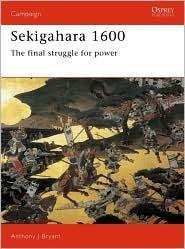
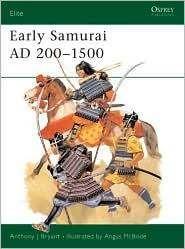
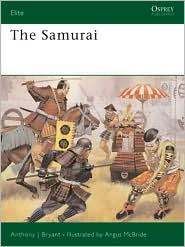
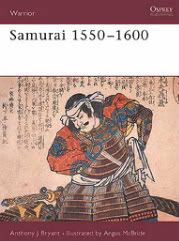
On behalf of the Samurai Archives, I’m pleased to be interviewing Anthony J. Bryant, author and historian of samurai history and esteemed SA Forum Citadel member. Tony has written four books, The Samurai, Early Samurai AD 200-1500, Samurai 1500-1600 and Sekigahara 1600 that have proven their weight in gold to numerous students of Japanese history and members of the SA Citadel. Apart from being a well-respected author and historian, who has consulted on numerous projects, including the recent BBC documentary on Sekigahara called Shogun: Heroes and Villains, Tony is also renowned for his knowledge of Japanese armor manufacturing process.
He’s an active member of the Society for Creative Anachronism as well as the Japan Armor and Weapons Research and Preservation Society and has also written numerous articles on the subject. Tony also has a website, Sengoku Daimyo (http://www.sengokudaimyo.com), which is a treasure trove of information related to Japanese history and armor. It’s a must-see site that should be bookmarked.

OK: How did you become interested in Japanese history? What got you hooked?

Embarrassing admission: Shogun.

When I was a freshman in college, one of my best friends was the librarian (no surprise with that!), and one day he threw me a big, fat book and said, "You have to read this. It's GREAT!" The book was Clavell's Shogun. I read it, and loved it.

I started taking Japanese history, then language, classes. Before long, I realized that if I wanted to ever graduate, I'd have to change my major to Asian Studies.

I was also getting actively involved in the SCA (Society for Creative Anachronism) at the time, and started spending more time trying to develop a Japanese "persona."


OK: It’s really no surprise that Clavell’s Shogun got you hooked. Seeing the miniseries during its original run helped to get me hooked when I was a child. I often wonder how many post-1980 Japanese professional and amateur historians are in his debt. What kind of a Japanese “persona” did you develop in the SCA? This is interesting. Can you tell us a little about it? How did it help you delve deeper into the study of Japanese history?

Well, originally it was not too well fleshed out. Kind of "generic samurai type" and late 1500s. Rather embarrassing, really, given what I've learned since. It was 90% enthusiasm and 10% knowledge. I didn't really get a handle on what a *real* Japanese persona would have been like until I went to live and work in Japan in 1986.

I've been told by a few people since then that I've kind of become the SCA's "go-to-guy" for Japanese stuff, but I don't think that's as true anymore. There are more and more people who are expanding the field of knowledge out there. A few of them have been my apprentices, like Josh Badgely here in the forum, but others like Lady Fujiwara (Kass McGann; it's a sin that she hasn't been made a Laurel for her work), Lady Saionji (who spends part of her time as "Lady Jehanne") Lady Solveig, and Count Raito (who is, by the way, currently king of Northshield) are spreading the good word and pushing the outside of the envelope. House Yama Kaminari has a very visible presence, and every year they manage to get a bit better and better (although I still am somewhat nonplussed about samurai camping out in yurts -- I thought we whupped the Mongols when they came calling Wink ) .


OK: I know from interacting with you on the SA Citadel Forum, you are fan of Heian through Azuchi-Momoyama history, but this is a fairly large timeframe. Is there a particular period that fascinates you more than others?

Oof. Tough call.

I think I like *most* periods of Japanese history, but for different sets of reasons. It's almost easier saying what I *don't* like. (Generally, Edo bores me to tears, although there are shining moments, events, and people that grab my interest.)

I'm particularly interested in the "high-Heian" court culture. I'm fascinated with the development of the Court and ranking system. The "soft culture" in particular appeals to me. That is, what was the LIFE of a courtier like? What did he eat? What did he wear? How did he get around? What did he actually DO for the greater part of the day, when he wasn't writing maudlin love poetry on the tear-dampened sleeves of his night-dress? (I think it may be a sad admission, but I actually have about five books in my professional library with the words "yûsoku kojitsu" -- 有職故実 -- in their titles. It's a hard term to translate, but basically it's something like "the way they used to have and do things," and it's all clothing and equipment and furniture and ranks and so on.

On a related note, I am fascinated by the power transition from the court in Heian Japan to the bakufu in Kamakura Japan, and the character of Taira no Kiyomori as a bridging figure. He literally was at once the last civil ruler, and at the same time the first martial class ruler -- a true bridging figure.

As a military junkie, the rise of the samurai fascinate me. The totally different natures and functions of governments of the three bakufu are startling, and actually something that most people probably don't even think about. A shogunate is *not* just a shogunate, and all things are not equal.


OK: You’ve already mentioned Taira no Kiyomori. Is he the most interesting persona from Japanese history for you? If not, who do you find the most interesting and why?

Miyamoto Musashi.

No, just kidding.

At different points in time, I have dad different "heroes" so to speak. I have, in due course, cycled through Yoshitsune, Takeda Shingen, Kusunoki Masashige,

As I read more, I find my opinions changing, though, as I begin to realize that much of the Western concept of the ideal samurai (whatever that may mean) and characters conventionally deemed worthy of respect, are what I consider the product of "lies told to gaijin" -- a variation on "lies told to children." For example -- yes, Yoshitsune was a tragic figure. He was also, apparently, rather capricious, a bit overly impulsive, and either naive or stupid beyond sane levels. Either he didn't realize he was being used, or was willing to let himself be for personal gain -- and that was a fatal character flaw. Was he a great hero, or just another mook?

To say I was interested in Nobunaga, Ieyasu, or Hideyoshi would be almost a cliché.

As I did research for Sekigahara, I found myself more and more being drawn to the personalities of Ishida Mitsunari and Kobayakawa Hideaki -- mostly because SO much is really not known about their true goals and motives, as those left to tell the story were not on their sides. I think it might be precisely the very opacity of the history there that is the reason I like them so much. Much of their "bad press" may be (I emphasize *may* be) attributable to their hostile biographers, and so much more is up for speculation that it's a never-ending source of speculation and opinions.


OK: What you just said about Ishida Mitsunari and Kobayakawa Hideaki is quite interesting. These are fascinating characters. Why do you suppose that they’ve been largely ignored in English-language scholarship and publications? Can you really attribute this, though, to hostile Japanese biographers? After all, the pickings in English are slim or next to none about some of the other titans of the Kamakura, Muromachi, Sengoku and Momoyama periods. This bothers me, as I’d love to see well-researched and equally well-written books on people like Uesugi Kenshin, Ashikaga Takauji, Date Masamune, Hojo Soun, Kato Kiyomasa, etc.—just to name a handful. Why do you think this is the case? Has there been an Edo period “bias” among researchers in the past?

Well, by "hostile biographers" I mean their immediate biographers. People who kept the records, and wrote diaries, shortly after the events transpired. And, certainly, through the Edo Period. In the police state that was the Edo bakufu, you wouldn't expect to find anyone doing the research to prove that the dynasty's founder was actually a crafty and Machiavellian usurper -- but that's exactly what he was. So the histories naturally would have painted Mitsunari, at least, in the worst possible light. The only question that remained for them was motive, and there's a host of possible suggestions, none of which would have been to the credit of a good man. So I have to wonder if they were protesting a bit too much. Mitsunari clearly was an ass, someone greatly lacking in the social skills to carry off his great endeavor, but I have to think he was also loyal to the one person who'd always been good to him -- Hideyoshi. That's why I tend to think his motives really *were* to preserve the Toyotomi. He just didn't think it through as well as he should have, and managed to cheese off the wrong people on the way.

The reason he and Hideaki and others have been largely ignored, I think, is that they're really just barely more than footnotes on Ieyasu's juggernaut onslaught to historical importance. Ieyasu is *such* a dominating person, and he had *such* an effect on the history of Japan that everyone else is in his shadow. And, really, it's always been like that. How many people can name the kings and princes Napoleon crushed in his effort to dominate Europe?

As to the English language world -- all those great names you mentioned are still suffering from the "extremely foreign" disease. Japan does not share the roots of our Western heritage in the same way that Thermopylae, Carthage, the Gauls and Celts, the Vikings, the Crusades, and the Renaissance and Age of Reason do. They are *outside* of that. Thanks to geography and Heroditus, we in the West are even more connected to Asia Minor (and especially a perennial favorite of Discovery TV, Ancient Egypt) than we ever will be to China or Japan. They are always going to be "the Other."

As a result, any market for books about them -- especially serious academic studies (which have a notoriously narrow interest *anyway*) -- is bound to be, sadly, small.

It's one of the reasons why, when people tell me they want to learn all about this or that really specialized area, I tell them to learn Japanese. There really is no option in the forseeable future.


OK: How did you find the Samurai Archives and what drew you to its forum?

Ancient history.

I was involved with a couple of Delphi forums, so one day I did a search of their forums for "Japanese History" and found the old Delphi Samurai Forum. (I think that was in 1837, when computers were powered by gerbil wheels.) And I've been with the gang ever since, through the various incarnations.


OK: Let’s talk about your books. Your works are often labeled as “MUST-READ” for those who want to start learning about samurai history. What made you decide to write? Were beginners the intended target audience of your three general books on samurai?

It's an honor to hear something like that, but I don't know if I totally buy it.

I don't know if I'd consider them "must read" books, but I *was* trying to make books that were popular -- and by that, I mean popular in the sense of "Japanese history for everyone" rather than academics. I think to an extent I paid for that academically -- a few people clearly had me pegged as "non ivory tower material" for trying to get the hay off the loft and onto the floor where the horses can get at it.

I like to think of my books as the gateway drugs to Japanese historical studies -- that after reading mine, they might find their way to read Elisonas, Friday, Gobbel, Farris, Jansen, Mass, et al.

The popular history aspect has paid off in some ways, however, as people seem to view me as more accessible, perhaps, than cloistered professors may be.

As to what made me start, though... well, that's really serendipity. When I wrote my first book for Osprey, there was only ONE other Japanese title -- Steve Turnbull's "Samurai Armies 1550-1600." I was really into Kamakura at the time, and living in Japan, so I knew there was a big hole there. Centuries of uncovered material. So I wrote Osprey a letter, suggesting that I should write a complementary book taking samurai up to 1550, and provided my professional and "interest" qualifications. (At the time, I was editing Tokyo Journal, so I had plenty of experience as a writer.)

They suggested, instead, that I should write a more detailed book on the samurai for a new line they were starting, called "Elite" -- and after that one, asked me to do a second Elite title that was more in line with my original suggestion. If memory serves, they actually asked me to write the last two or three I did. By the time I finished Sekigahara, I was back in the States and removed from general access to Japanese museums and battle sites.


OK: I guess it’s inevitable, but as you both have been published by Osprey, your works and those of Dr. Stephen Turnbull often get compared as you both have written about similar subject matters. Both you and Turnbull have done an invaluable service in terms of making samurai history accessible to the English-speaking world. However, I tend to view your books as the “next step” after reading Turnbull’s non-specific campaign or fortification-related Osprey works. He focuses on the “general”, while you tend to focus on the technical details—such as arms and armor and how they correspond to the times you are writing about. Do you think this is a fair assessment?

Well, my big thing is armour, after all. What they wore, what they had with them -- it's that "yûsoku kojitsu" thing.

I think people expect me to have a love-hate relationship with Turnbull -- but I've never actually met, spoken with, or even written him.

I probably should drop him a line someday. Wink

The thing is, the first HISTORY book I read about Japan -- not Shogun, but a real book about real Japanese people -- was his The Samurai, published in 1977. It went with me to Japan, and I *still* have it with me today. That book, as much as anything else, set my feet on the path I eventually followed.


OK: I believe that like Clavell, many of us also owe a debt of gratitude to Dr. Turnbull, who is often on the receiving end of a lot of scorn by the academic community. How has the academic community reacted to your writing and research? I believe that Sekigahara is used as a text in some university classes that focus on samurai history.

That would please me immensely.

Actually, it was rather a schizophrenic response. In some ways, as a grad student, the fact that I'd actually *published books* on what I was studying was a bonus -- but in other moments, the fact that they were so... well, basic, all-encompassing, and (gasp!) unacademic hurt.

I do remember with some pleasure in one of my history seminars as we approached the battle of Sekigahara, the teacher started his lecture by actually quoting the first line of the book to us. And then he MENTIONED the book, and pointed to me, and said "He wrote the book on this battle." He gave the lecture, but allowed me to frequently interject commentary. That was the single best day I ever had as a graduate student, and I'll never forget Professor Wilson for that kindness.


OK: How do you feel about the current state of Japanese historical academia? As alluded to before, many people feel that the Sengoku period seems to have fallen by the wayside among academic circles. As a specialist of the Sengoku period, have you ever had the desire to pursue a full-time career in academia?

Sore subject, but the short answer is, yes. That *had* been the goal.


OK: You are also an expert on samurai armor and the art of how they are made using the traditional techniques. It is my understanding that you spent a considerable amount of time studying this art and have made some beautiful pieces yourself. Would you consider picking up the tools of the trade again? While the market is small, I’m sure that some collectors would pay handsomely for custom-made armor sets. Do you have any pictures of some pieces that you made that you’d like to share with us?

Not anymore, I don't. I have a nasty habit of giving things away. When I got into stained glass for a few years in college, I did a pile of windows, boxes, and so on. I don't have a one. Ditto wood carving, oil painting, etc.

Sigh.

If I am ever in a position, however, to have the *space* to start something up again, I would like to. I am currently suffering "apartment hell" -- with too many hobbies and not nearly enough space for any of them.


OK: As you know, some SA Citadel Forum members as well as friends have been pressuring you to write something new on the battle of Sekigahara. Your book of the same title is a gem, but the 96-page format of the Osprey Campaign Series of books doesn’t leave you the room to go into the details that many of us hunger for. Are you considering a return to this fascinating topic? I’d also love to see you take this topic on in a way that inclusively covers the run-up to the confrontation between Ishida Mitsunari and Tokugawa Ieyasu as well as the Kyushu and northeastern Japan campaigns and associated political intrigue.

Yes, and I've found it's really difficult to touch-type with one arm wrenched behind one's back.

As a matter of fact, I have notes now, and vague outlines, for a sort of Sekigahara "double-whammy" -- a *real* serious, and more in-depth history of the battle, as well as a novel about it. The novel is the one I really like the idea of, as THAT'S where I'd get to let all my evil theories and rampant speculation take wing. The trick would be finding markets for them.

This all started again when I was doing the research for the BBC's docudrama episode "Shogun" about Tokugawa Ieyasu and Sekigahara for the series "Heroes and Villains." As I started going back through my research, I found out (again) how fascinated I was by this battle, and all the political machinations that took place before it. It was invigorating -- to fall in love with the history all over again. And to realize how much never made it to the Osprey book.


OK: Well, we’re all waiting for those Sekigahara books, so get on with them! Don’t make us wait too long, okay? Do you have any other projects that you are working on that you can tell us about? Would you ever consider a foray into the world of historical Japanese fiction?

Well, I just finished a round of edits on a book called Himiko for Kurodahan. The author is an Italian gentleman by the name of Massimo Suomare, and it is an almost painfully annotated and examined look at Japan through the eyes of writers of the early Chinese chronicles. It's amazing how much history is in them, and how much history is *not* in them. So much -- so very, very much -- is speculation on the part of modern historians trying to read between the lines.

Who was Himiko? What was her connection to Amaterasu? And to Empress Jingu? And where -- and what -- was Yamatai? Or was it Yamai? Or was it Yamadai? And what was Wa?

It's a fascinating -- but very difficult -- book. The format is slightly intimidating, but when it comes out, I think a lot of people will like it.

As to my own projects -- wow, historical Japanese fiction.

I'd love to. I have so many ideas for things -- but I remain concerned about marketability.


OK: In terms of Japanese history, what have you recently been reading for leisure?

Promise you won't laugh.

I just picked up Selling Songs and Smiles: The Sex Trade in Heian and Kamakura Japan by Janet Goodwin. So far, it looks great but... well, the darned thing's not illustrated. Wink


OK: Who are your favorite historians and what books would you recommend? What about for Japanese historical fiction?

I have to start with my old boss at IU, Jurgis Elisonas (who did most of his publishing under George Ellison). His Deus Destroyed is *the* history of Christianity in Japan, and one of my favorite books on Japanese history.

The late profs. Marius Jansen and Geoffrey Mass left an incredible void -- their work, and the work of their erstwhile students, is incredibly valuable.

Anyone interested in samurai per se should definitely look into the works of Wayne Farris and Karl Friday.

Really, the list of recommendables would be way too long.

As for Japanese historical fiction -- well, it depends. I love JAPANESE Japanese historical fiction. I enjoy Yumemakura Baku's Onmyôji series, and I loved Tsuji's Azuchi ôkanki (which was translated into English as the must-read novel The Signore).

As for Western-written J-fic, however... I'm not overly impressed too much with some of what I've seen. But then again, I'm hyper picky. I can't read Shogun anymore -- the book that started it all for me -- for the picky errors in it.

Like a cop who's thrown out of a story mentioning a silencer on a revolver (pointless -- they work on semi-autos, but not revolvers), I'm thrown out of a Japanese historical story for mentioning the wrong garment, the wrong color on a robe, wax candles in a Heian mansion, etc. And so many writers have the "exotic disease" -- they HAVE to use Japanese words when there's a perfectly fine English one, just because the novel is set in Japan.

Maybe I've been an editor too long. It's hard to read for pleasure sometimes.


OK: Thank you, Tony. This has been a lot of fun, and as always, very interesting!


All of Tony Bryant’s books can be purchased from the Amazon-run Samurai Archives Bookstore http://astore.amazon.com/samurai-20.


If any blog readers have a question for Tony, post them to the comments before October 10th and I’ll forward them to Tony, to be answered in a later post.

Monday, September 22, 2008

Katanas And Joysticks: The Newest Wave Of Video Game Samurai

New for the Sony PSP (Playstation Portable) is 侍道 Portable (Samurai Dou Portable, or Way Of The Samurai Portable). This comes only in a Japanese language version but will work with any PSP. It's a handheld version of the popular series (with part three of the console version due to hit this November). It puts the player in the sandals of a ronin who drifts into town, and allows them to choose his role in a conflict brewing between rival samurai clans, merchants, thugs, and townspeople. This is done by having conversations with various people you meet around town, and the path the game takes branches depending on your answer. You can join any faction, join them all and play one against the other, or screw over all of them. There are lots of swordfights along with many missions and tasks given (depending on the faction you ally with), not to mention a multitude of different swords to collect.
This time, the story centers around a state called Gishuamari during the Sengoku period. By slaying the late ruling family, the Sakurai clan, a man named Fujimori became the state's Daimyo. As a ruler, he keeps an iron fist on his domain and the way he dispatched his former lord made him enemies of the peasants and old noble families. With the freedom provided in the game, you can betray your old employers and go with a new one, remove yourself from corrupt forces and join the battle for justice, or simply kill everything that moves. The game has excellent replay value, providing all sorts of endings both good and bad for the player to discover. The series is a particular favorite of mine-it's like an interactive chambara film that never unspools the same way twice.


Also out for the Japanese Wii and Japanese PS2 systems is the popular SNK fighting game, Samurai Spirits: 六番勝負 (Samurai Spirits: Rokuban Shoubu-'Sixth Match'). As the title would indicate, it's a compilation of five previous entires in the Samurai Spirits franchise along with an all-new sixth entry (天下一剣客伝-Tenka Ichi Kenkakuden-'The Legend Of The Country's Greatest Swordsman'). It's like getting six games in one! Online play is also a strong component of the release (at least for the PS2 version) along with lots of options to customize characters, along with extra training and versus modes in addition to the games. I haven't tried it myself since I usually don't care for fighting games, but it seems like a great value for a very storied line of games.


Released back in May was Kunitouri Zunou Batoru Nobungaga No Yabou (国盗り頭脳バトル 信長の野望-Nobunaga’s Ambition: National Domination Leader Battle) by Koei for the Nintendo DS (will work on any DS system, but is in Japanese language only). You might see this on assorted game sites as Owari Zunou Battle-not really sure where they came up with Owari, though, as that’s clearly wrong. This is a portable version of Koei’s extremely popular Nobunaga’s Ambition series, and is a bit different than the regular entries in the series. Here, you push ‘chess pieces’ representing famous generals over a map of Japan (board game style) in order to fight battles and conquer provinces. The elaborate province and government development of the normal games is absent, but it’s a fast moving, involving, and fun game. I’m finding it very enjoyable-nice graphics and portraits for such a small unit as well. You can download a trial playable demo for the game HERE.

Nobunaga No Yabou 2 (信長の野望 2-Nobunaga's Ambition 2) made its debut on the Nintendo DS (any system, but Japanese language only) in July. Looks like it's a port of the old Super Nintendo game Nobunaga's Ambition:Lord Of Darkness and will be back to the traditional province grabbing and developing routine.